Crypto AI agents are intelligent tools that simplify everything from trading to managing decentralized platforms, so you don’t have to sweat the small stuff. With AI agents taking the reins, users can focus on strategy while leaving the grunt work to algorithms built for blockchain precision. But how do they work, and what are the risks? Here’s everything you need to know about these trending tools in 2026.
KEY TAKEAWAYS
➤ Crypto AI agents automate complex blockchain tasks with minimal input.
➤ Some agents have tokens, but token hype does not prove utility or safety. Always research before investing.
➤ Challenges with AI agents include data reliability, scalability, and regulatory uncertainties.
- What are crypto AI agents?
- How do crypto AI agents work?
- Key components of crypto AI agents
- Top crypto AI agents to know about
- Crypto AI agents vs. traditional crypto AI projects
- Can crypto AI agents control your wallet?
- What are the challenges with crypto AI agents?
- What’s next for crypto AI agents?
- Frequently asked questions
What are crypto AI agents?
Crypto AI agents are like having a super-smart, crypto-native assistant. They use artificial intelligence to handle tasks on blockchain networks — analyzing data, making decisions, and taking action — all within the limits you set.
Need a trade executed without having to manually analyze crypto market predictions? Or perhaps you’re looking to optimize your decentralized finance portfolio with predictive analytics? These agents can handle much of this for you — though you should always keep control over what they are allowed to spend.
What are AI agents?
AI agents are like those apps that know you all too well. They observe, think, and act, without waiting for you to push a button; consider how Netflix predicts your next binge-worthy show or a fitness tracker nudges you to move.
Imagine a shopping app that notices you’re out of toothpaste. It doesn’t just remind you — it places the order, chooses the best deal, and schedules delivery. That’s an AI agent in action. It’s not magic. It’s just a smart system that processes data, learns from patterns, and makes decisions on your behalf.
The use of AI agents is steadily gaining traction among consumers. For instance, Salesforce research indicates that 39% of consumers are comfortable with AI agents scheduling appointments, and 32% of Gen Z consumers are already comfortable with AI agents shopping for them.
First, it helps to understand the basic technology behind these tools. Let’s take a closer look.
How do crypto AI agents work?
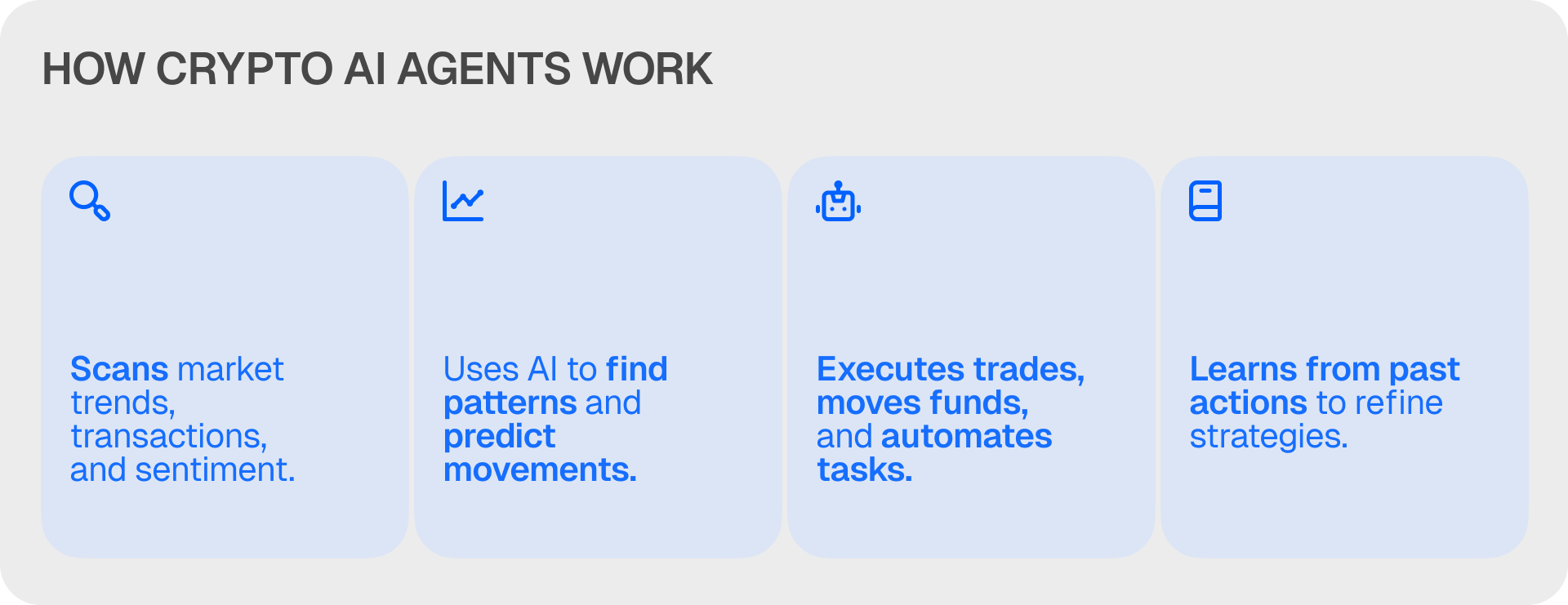
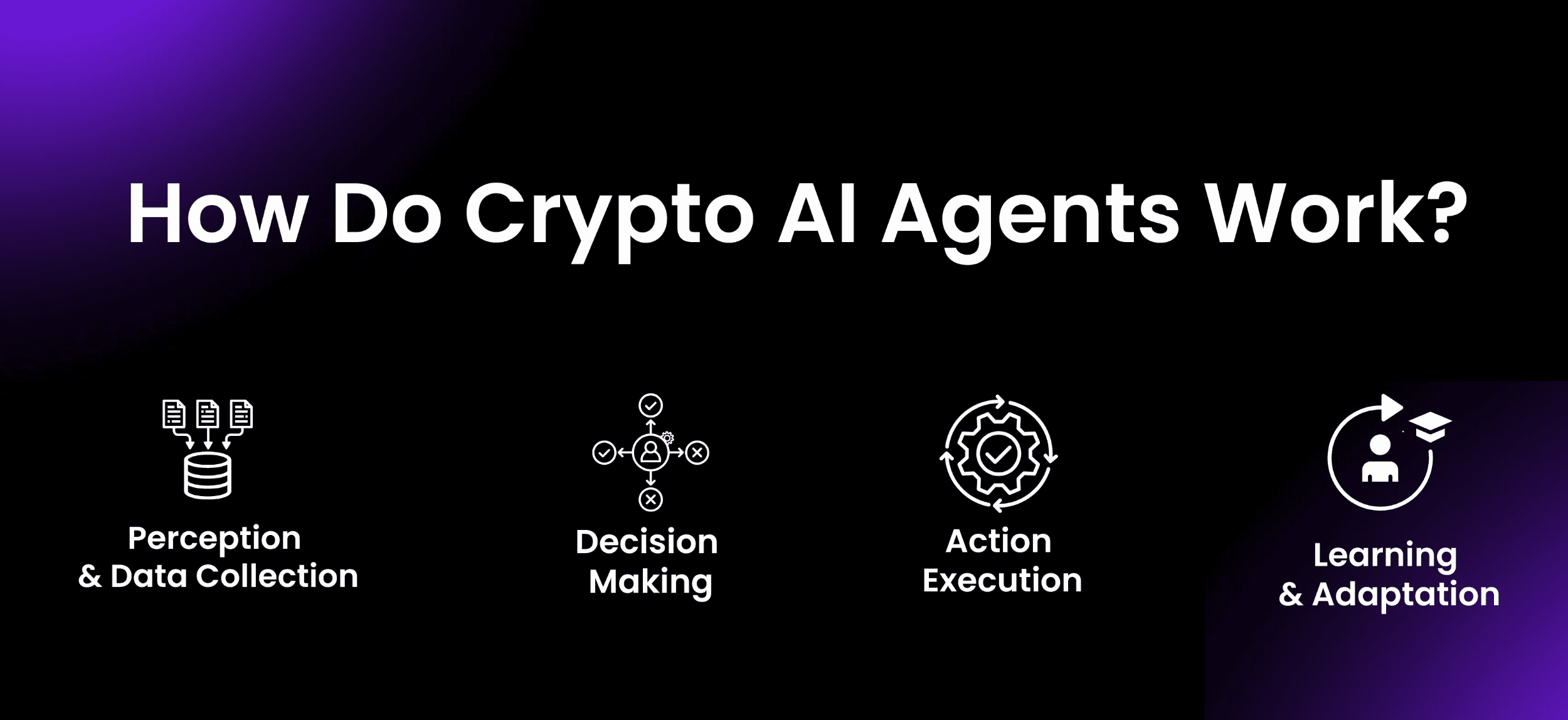
Crypto AI agents work by automating tasks on blockchain networks. They collect data, analyze it using artificial intelligence, and execute decisions without requiring constant supervision. It’s a three-step process: gather, decide, and act.
Think of crypto AI agents as the ultimate multitaskers. Imagine hiring an assistant who reads every crypto trend, knows when to invest, and can execute decisions faster than you can refresh your portfolio.
From there, much of the work runs on autopilot — though, as we explain below, you should never hand an agent unchecked access to your funds.
What are the steps involved?
AI agents primarily use a three-step process.
1. Gathering information
First, crypto AI agents collect data — tons of it. This includes market trends, blockchain transactions, DeFi stats, and more. They’re like sponges, soaking up everything they need to make informed decisions.
2. Making decisions
Next, they analyze all that data. Using pre-programmed rules or advanced machine learning and predictive analytics, they decide the best course of action. Think of it like a GPS calculating the fastest route — it’s all about efficiency.
3. Taking action
Finally, they execute. Whether it’s placing a trade, moving funds, or triggering a smart contract, they handle the action, so you don’t have to. While AI agents perform some of the same functions as AI trading bots, the former are much more advanced.
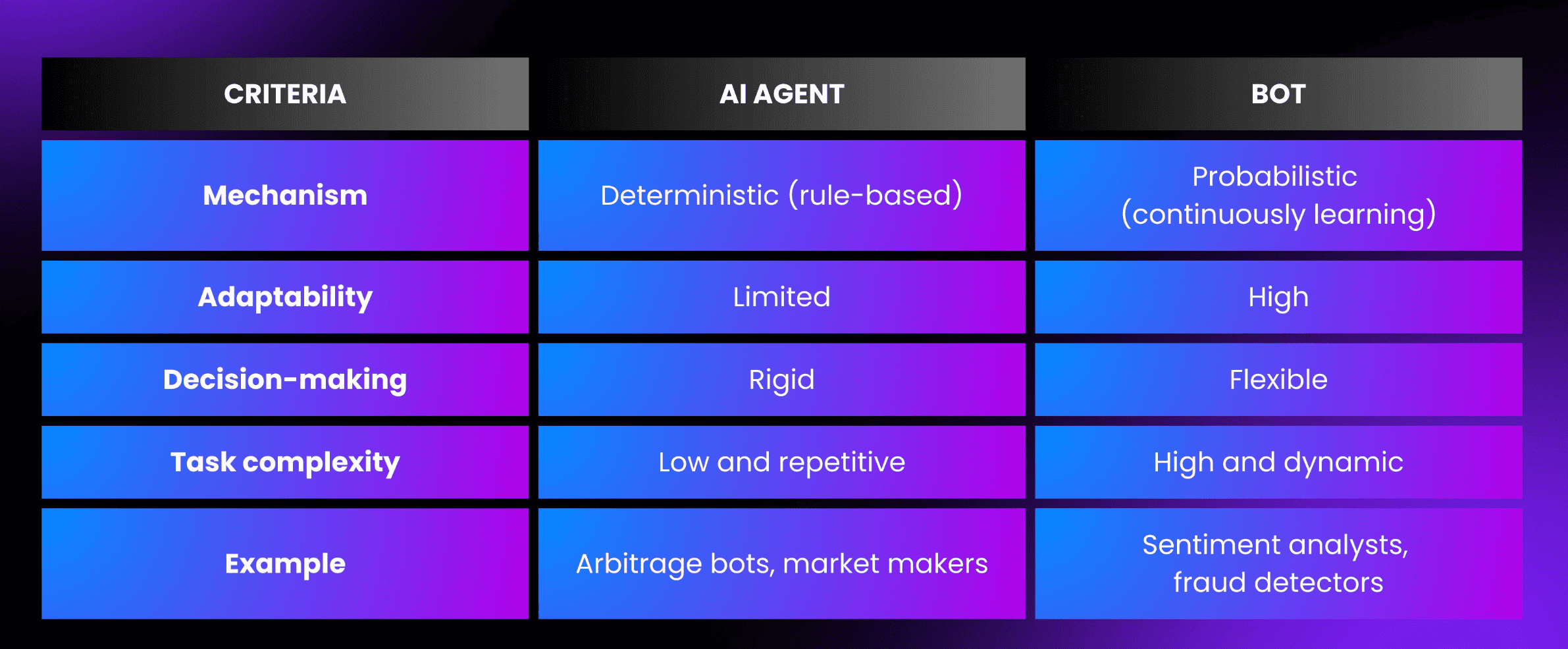
Picture this: you’re into yield farming, and your agent notices a DeFi pool offering better returns. Before you even think about it, it shifts your funds there. Or maybe you’ve set it up to monitor a token price — it buys low for you without hesitation. It’s like having a personal crypto concierge working 24/7. But then, you need to know when and how to establish control — especially when it comes to AI.
Key components of crypto AI agents
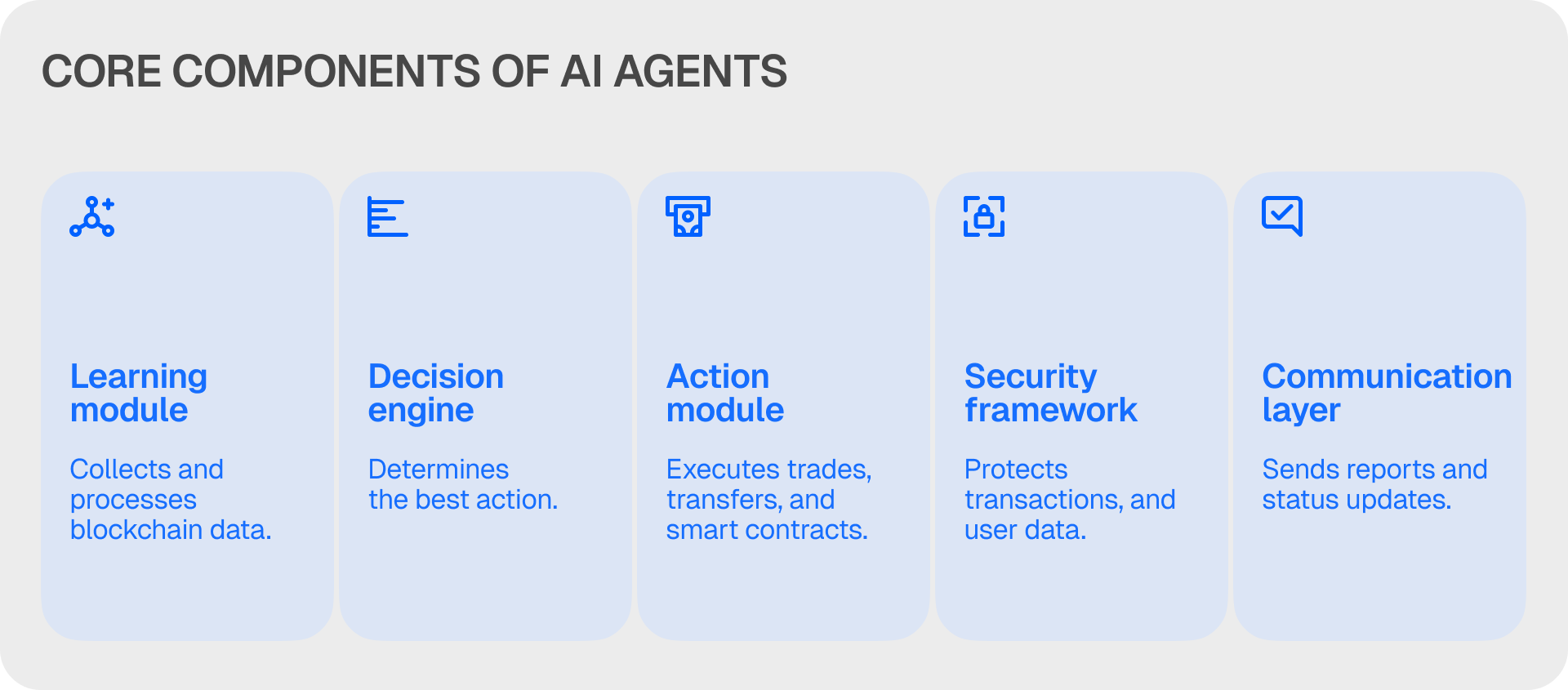
Crypto AI agents are built on a foundation of interconnected components. Here is how each component works in synergy:
Learning module
This is the brain of the agent, where it collects and processes data from blockchains, market trends, and DeFi protocols. Think of it as the agent’s research department — constantly analyzing past and real-time data to refine strategies.
For crypto AI agents, this module is trained to understand blockchain-specific datasets like smart contract interactions, token flows, and market volatility.
Decision engine
Once the learning module has done its job, the decision engine steps in. This is like the agent’s personal strategist, analyzing the processed data and deciding on the best course of action. Whether it’s spotting arbitrage opportunities or reallocating funds, this module ensures the agent makes informed, logic-driven decisions.
Action module
This is where things get real. The action module executes the agent’s decisions, whether that means placing a trade, moving funds between wallets, or triggering a smart contract. It’s the executor of the system, ensuring every task is carried out efficiently on the blockchain.
Communication interface
Every good agent needs a way to report back. The communication interface allows crypto AI agents to interact with users and other systems. It handles status updates, notifications, and task confirmations. For example, it might send you an alert when it completes a trade or moves assets to a high-yield pool.
Security framework
In the blockchain domain, security is non-negotiable. The security framework ensures the agent operates safely, protecting user data, private keys, and executed transactions.
It uses encryption and multi-layer authentication to prevent breaches and unauthorized access. Without this framework, your digital assistant might be more of a liability than a helper.
Blockchain integration layer
This module connects the agent to blockchain networks, enabling it to interact with smart contracts, wallets, and DApps. It ensures the agent can function across multiple ecosystems, whether it’s Ethereum, Solana, or Base. Think of it as the bridge between the agent and the blockchain space.
Autonomous execution layer
What makes crypto AI agents unique is their autonomy. This layer ensures the agent can function independently, monitoring conditions and executing actions without requiring constant user input. It’s what turns a regular trading bot into a self-reliant crypto assistant.
Top crypto AI agents to know about
Crypto AI agents offer smarter ways to trade, manage DeFi portfolios, and even generate revenue. Here is a quick list of some of the top crypto AI agents in 2026.
- Virtuals Protocol: Built on Base
- ElizaOS (formerly ai16z): A well-known AI agent framework and decentralized autonomous organization with a DeFi focus
- Zerebro: Uses AI to optimize blockchain metrics
- AIxbt: Meant for traders who outsource analysis
- Truth Terminal: The one behind the Goatse Gospel
- Clanker: A token-deployment agent on Base
Now let’s check out each crypto AI agent project in detail:
Virtuals Protocol
Virtuals Protocol is like the master agent for your other autonomous agents in crypto. Built on Coinbase’s Base blockchain, it helps you create co-owned AI agents that generate revenue from managing digital assets in gaming and entertainment.
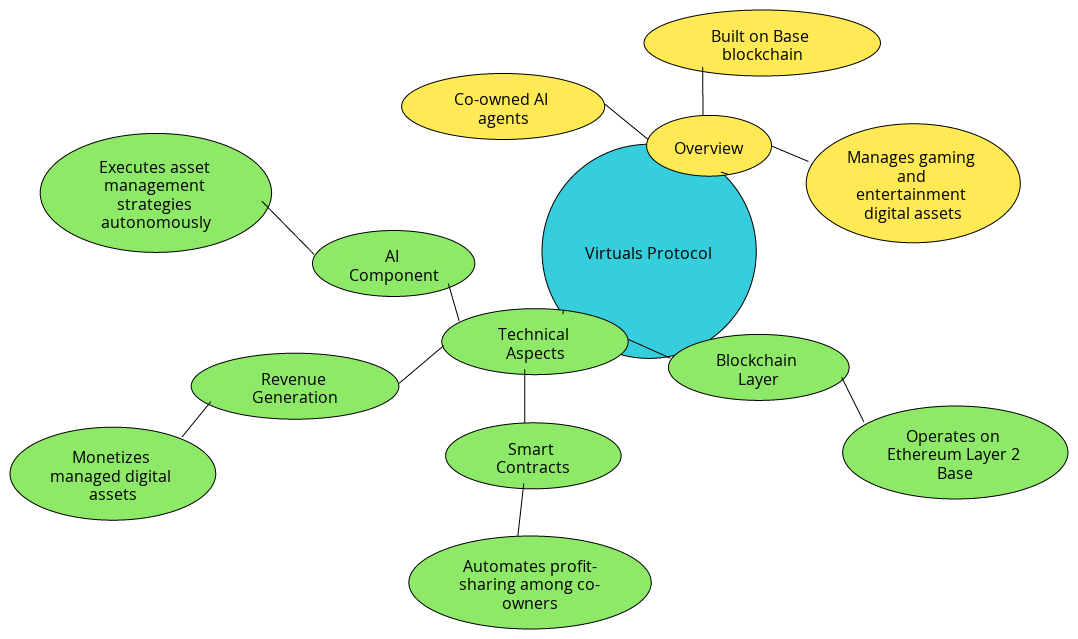
Smart contracts handle profit-sharing among co-owners, so there’s no need to argue over who gets what. It’s like hiring a super-organized team leader for your digital managers — no spreadsheets required.
ElizaOS (formerly ai16z)
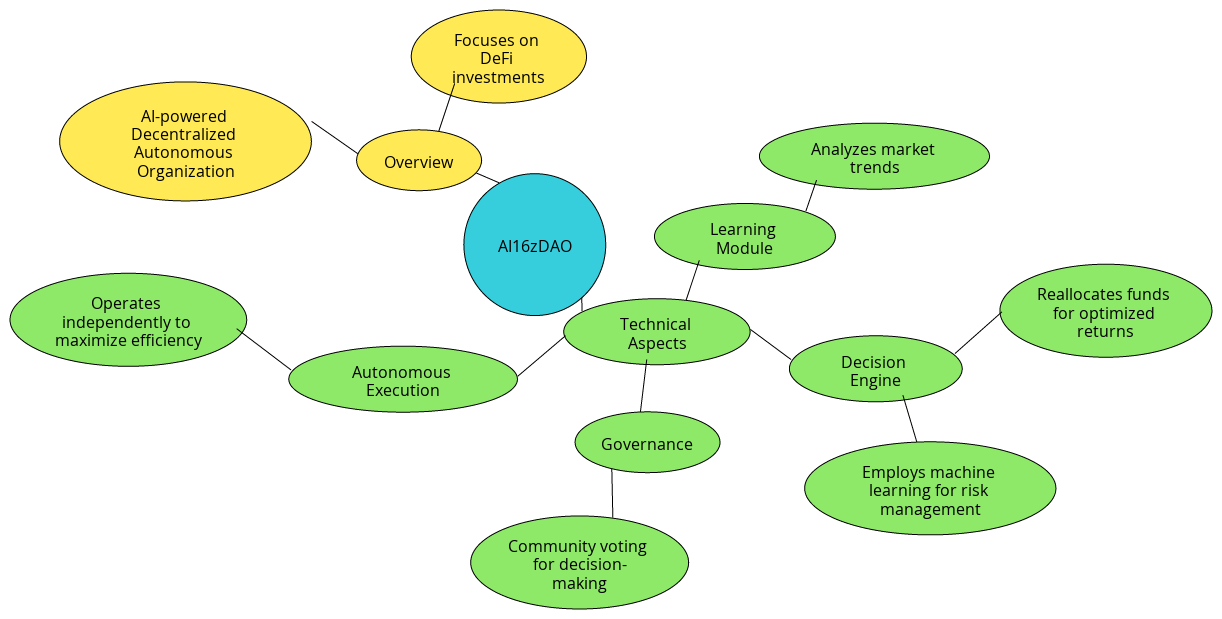
Think of ElizaOS — the project formerly known as ai16z, which rebranded in early 2025 after a naming dispute with venture firm a16z — as your DeFi investment coach that never takes a day off. It’s an AI-powered DAO that manages assets autonomously, analyzing market trends and reallocating funds to maximize returns.
Risk management is covered with machine learning models. Governance is where your vote comes in. It’s like having a Wall Street portfolio manager — except it’s decentralized, doesn’t charge commissions, and doesn’t wear a suit.
Zerebro
Zerebro acts as blockchain’s personal trainer — pushing it to perform better, faster, and more efficiently. Using AI, it optimizes network scalability, allocates resources intelligently, and executes smart contracts faster than you can say “block confirmation.” Imagine your blockchain hitting the gym and coming out stronger, leaner, and ready to tackle anything. That’s Zerebro in action.
AIxbt
AIxbt is a market-intelligence agent that monitors crypto data and surfaces trade-relevant analysis around the clock. It is built for traders who want a research assistant rather than a hands-off trader. Worth noting: AIXBT rode the early-2025 AI-agent hype to a peak market cap near $500 million, but its valuation has since fallen sharply — a reminder that agent-token prices can be highly volatile (figures as of mid-2026).
Truth Terminal
Truth Terminal is best understood as a culture-and-memecoin case study rather than a tool that solves a user problem. It is the AI experiment behind the “Goatse Gospel” narrative that inspired the meme coin GOAT. Its main significance is as an early example of how an AI agent can shape attention and move markets — GOAT remains a pure memecoin whose price tracks hype cycles rather than a roadmap (as of mid-2026).
Clanker
Clanker is one of the cleaner examples of an agentic crypto tool. It is an autonomous agent on Coinbase’s Base blockchain that deploys ERC-20 tokens on demand: a user tags it on the social network Farcaster, and it handles the token creation and deployment. It shows how an agent can turn a plain-language request into an on-chain action with minimal human steps.
Honorary mentions
- Act I: The AI Prophecy (ACT): A project integrating AI agents within the blockchain ecosystem, focusing on autonomous systems designed to perform specific tasks with minimal human intervention.
Crypto AI agents vs. traditional crypto AI projects
The crypto space can become overwhelming. It is easy to mix up crypto AI agents with crypto AI projects. Let’s take a look at the difference to clear up any confusion.
Crypto AI projects are broad initiatives that integrate artificial intelligence into blockchain technology. They aim to enhance various aspects of the crypto ecosystem, such as improving transaction efficiency, enabling smart contracts-specific or any other form of web3 automation, or providing AI-driven analytics.
These projects often develop platforms or tools that leverage AI to offer new functionalities within decentralized ecosystems.
Crypto AI agents, on the other hand, are autonomous entities operating within these ecosystems. They perform specific tasks like trading, data analysis, or content creation, often without human intervention.
Think of them as AI-powered assistants designed to execute particular functions within the broader AI-enhanced crypto platforms.
| Aspect | Crypto AI projects | Crypto AI agents |
| Scope | Broad platforms integrating AI to enhance blockchain functionalities. | Specialized autonomous entities performing specific tasks within the crypto ecosystem. |
| Functionality | Develop tools and infrastructures for AI applications in crypto. | Execute particular tasks like trading, analysis, or content creation autonomously. |
| Examples | Fetch.ai (FET), SingularityNET (AGIX), and Ocean Protocol (OCEAN) — the latter two since merged into FET under the Artificial Superintelligence (ASI) Alliance. | Virtuals Protocol, AIxbt, Truth Terminal. |
Did you know? Some crypto AI agents have introduced their own tokens to facilitate operations and incentivize user engagement. For instance, Virtuals Protocol utilizes the VIRTUAL token within its ecosystem, while Clanker operates with the CLANKER token. These tokens often serve purposes such as governance, accessing premium features, or rewarding participants.
Can crypto AI agents control your wallet?
This is the most important question to ask before using any crypto AI agent, because it decides how much can go wrong. “AI agent” covers a wide range of setups, from tools that only suggest actions to systems that hold your keys and move funds on their own. Broadly, there are three models:
- Agent suggests, you sign. The agent analyzes and prepares a transaction, but you review and approve every signature in your own wallet. This is the lowest-risk model.
- Agent spends within limits. You grant the agent a capped allowance or session permission, so it can act on its own up to a boundary you set.
- Agent holds the keys. The agent (or the service running it) controls the wallet directly. This is the most convenient and the most dangerous, because a bug, exploit, or bad instruction can drain funds with no human in the loop.
The safest pattern, recommended in industry security guidance, is “agent prepares, user signs.” Before trusting any agent with on-chain actions, find out which model it uses, what it is allowed to spend, and whether you can revoke its access quickly.
What are the challenges with crypto AI agents?
Crypto AI agents may seem like the ultimate blockchain solution, but they come with their fair share of hurdles. Let’s break down the biggest challenges facing these autonomous tools:
Complexity of blockchain integration
Integrating crypto AI agents into blockchain networks like Ethereum or Solana can be a logistical nightmare. Different protocols and decentralized infrastructures require advanced interoperability solutions, making interaction a challenge.
Data reliability
AI agents depend on real-time data to make decisions, but the quality of blockchain data isn’t always reliable. From blockchain oracles that fetch external information to smart contracts prone to inaccuracies, agents must weed out potential data pitfalls.
Security risks
Operating autonomously makes these agents prime targets for cyberattacks. Hackers can exploit numerous vulnerabilities in smart contracts, gain access to private keys, or manipulate market trends to trick the agent. A strong security framework is non-negotiable.
Wallet permissions and approvals
The biggest practical risk is how much authority the agent has over your funds. Key questions: Does it only prepare transactions, or can it sign them? Does every write action require your approval? Are there spend limits or allowances that cap what it can move? An agent with an open-ended allowance can drain it; one that asks you to approve each action is far safer.
Prompt manipulation
Because agents read external data — web pages, messages, on-chain content — attackers can plant instructions designed to hijack the agent (a tactic known as prompt injection). A manipulated agent could be tricked into approving a malicious transaction or leaking sensitive data.
Kill switches and audit logs
If an agent starts misbehaving, can you stop it fast? A trustworthy setup gives users a clear kill switch and a log of what the agent did and why, so actions can be audited after the fact. Agents that run with no off-switch and no record are far harder to trust with real money.
Scalability issues
Blockchain networks often face congestion, leading to delays and higher gas fees. For crypto AI agents that depend on quick execution, these bottlenecks can hinder performance, especially on networks like Ethereum during high traffic.
Regulatory uncertainties
From the U.S. to the E.U., regulations surrounding blockchain and AI are constantly changing. Autonomous agents raise questions about liability and compliance, especially when they handle financial operations like trading or DeFi interactions.
Ethical considerations
Giving AI agents too much autonomy can lead to unintended consequences. If an agent executes a trade that causes market instability, who is responsible? Balancing autonomy with accountability is still a grey area.
These challenges may seem daunting, but they’re not insurmountable. As crypto AI agents mature, solutions like better blockchain integration and stronger regulatory frameworks will likely pave the way for safer and more efficient tools.
For a broader look at how AI policy and model dependence can affect crypto agents, see our guide on model-access risk in crypto AI agents.
What’s next for crypto AI agents?
The clearest shift in 2025–2026 is the rise of agent payments and wallet-connected AI. In May 2025, Coinbase launched x402, an HTTP-native protocol that lets AI agents pay for APIs and services with stablecoins without a human in the loop. In September 2025, Google announced AP2 (Agent Payments Protocol), an open standard for agent-led payments that, via an extension built with Coinbase, the Ethereum Foundation, and MetaMask, treats stablecoins and crypto as first-class payment methods. Tooling has followed: Base MCP lets AI assistants connect to wallets to check balances, send funds, swap tokens, and call contracts — with user approval required for write actions — and Coinbase has shipped its own tooling for connecting agents to accounts within user-set limits.
Identity and trust standards are emerging alongside payments. ERC-8004 — a draft Ethereum standard whose first registry contracts went live on mainnet in early 2026 — aims to give agents on-chain identity, reputation, and validation so counterparties can vet them before transacting. Together, agent payments and agent identity point to the real near-term question: not just how smart agents are, but what authority they hold over your wallet, payments, signatures, and spend limits. Expect that, along with regulatory and scalability pressures, to shape adoption.
Disclaimer: This article is for informational purposes only and does not constitute financial advice. As outlined in this guide, using AI agents comes with risk. Always DYOR.