


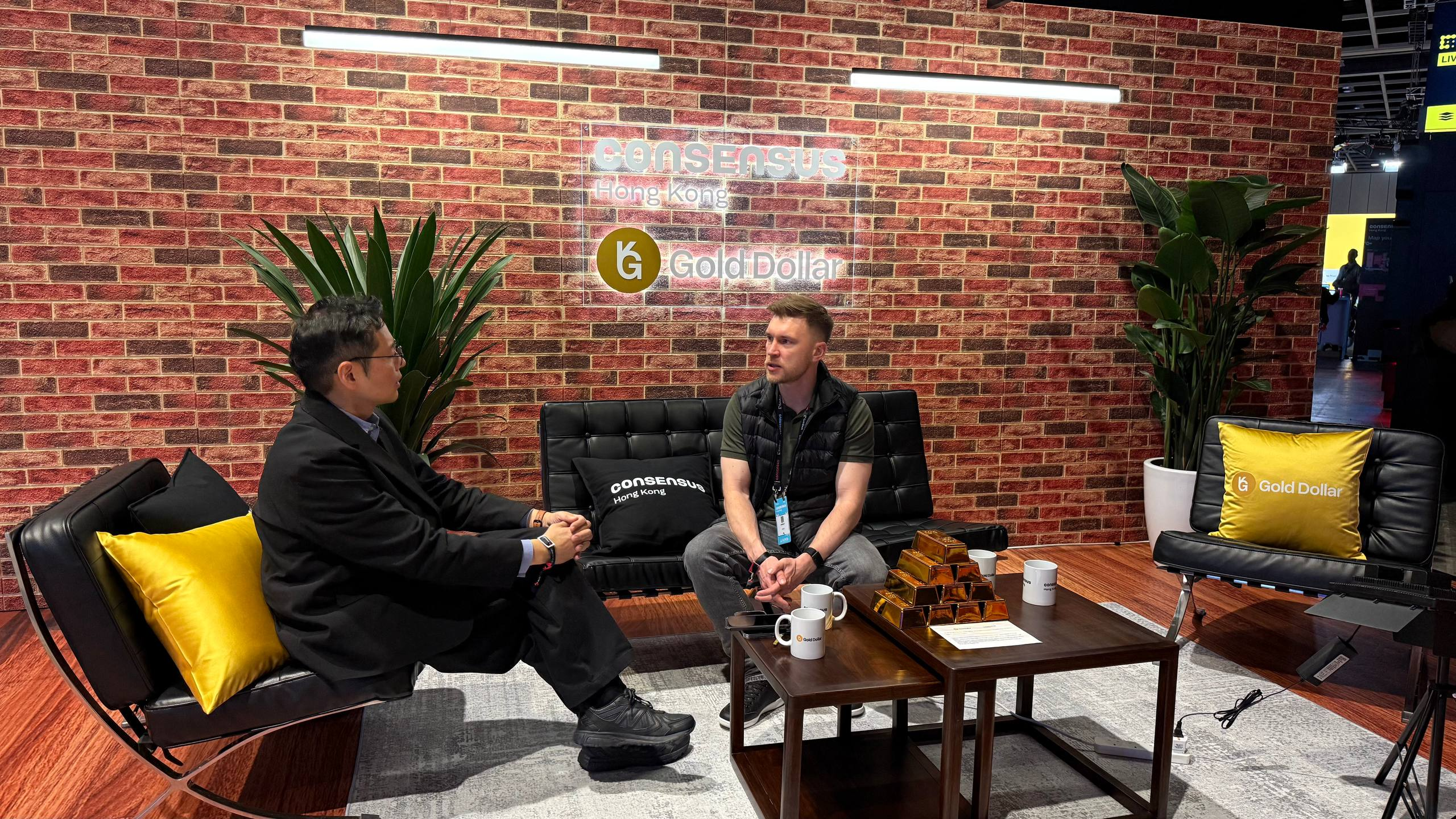
Building a swap DApp is relatively straightforward. Running it under real market conditions — with bots, arbitrageurs, and volatile liquidity — is not. BeInCrypto sat down with Andrey Fedorov, CMO & CBDO at STON.fi Dev at Consensus Hong Kong to hear what that process actually looked like.
STON.fi launched as an AMM (automated market maker) on TON Blockchain — a swap interface with liquidity pools. Omniston, its liquidity aggregation protocol, came later as a response to fragmentation: multiple DEXs on TON meant users had to manually compare prices across protocols. Omniston was supposed to fix that by aggregating liquidity into a single access point.
Aggregation worked. But scale exposed new constraints.
Three Lessons From Production
Fedorov is candid about what went wrong early on. “First there was just one token, and it was very easy to provide the technology. Activity levels were minimal, and the user base was still small. But over time it exploded.”
The first lesson was scaling. Both the front end and back end buckled under unexpected demand. The second was subtler: multi-hop swaps — routing trades through intermediate tokens — worked in testing but revealed edge cases under live conditions. “In theory, both hops execute seamlessly,” Fedorov explains. “In practice, you have simultaneous transactions, liquidity shifting across pools, and multiple DEXs updating state at once. The first hop can succeed while the second fails.”
The third lesson was about complexity itself. The initial model assumed a simple set of actors: users swap, liquidity providers provide. Reality added arbitrageurs, bots, and more complex interaction patterns that hadn’t yet been fully anticipated. “I don’t think it is actually possible to work out all these things in the beginning. You need to launch it, see how it goes, then fix something if it breaks.”
STON.fi now accounts for 80 to 90 percent of DEX activity on TON, underscoring its dominant share of swap volume on the chain. But cross-chain swaps, next on the roadmap, will reset that counter. “The fundamentals will be the same, but I’m sure we will see new challenges.”
Why Aggregation Wasn’t Enough
Omniston’s original proposition was to connect all TON DEX pools and find the best route. But aggregating public liquidity has a ceiling. If nobody has added liquidity to a particular pair, no amount of smart routing helps.
“Sometimes people just don’t want to provide liquidity in a specific pool,” Fedorov says. “When a user wants to swap a token in this pool, they can’t get a good price because there is no liquidity.”
The answer was escrow swaps — a parallel execution path that taps into private liquidity from professional market makers, or “resolvers.” Instead of relying solely on AMM pools, Omniston now evaluates both public and private sources and routes each swap through whichever delivers the better outcome.
“It’s not a silver bullet, because we need to have both. The combination provides the best experience.”
Tokenized Equities as a Stress Test
The escrow model proved its value when STON.fi integrated xStocks — tokenized representations of US equities issued by Backed Finance. These are technically TON jettons, but they behave differently from crypto-native tokens in ways that matter for execution.
The harder challenge was liquidity: unlike established crypto pairs, xStocks don’t yet have deep AMM pools across pairs. Technically, AMM support is there. But we also introduced an additional execution path — escrow swaps — so users can access deeper liquidity. Today, most xStocks volume executes through escrow.
From the user’s perspective, Fedorov insists the experience should feel identical to any other swap. “We want our users to forget about technical complexity. Under the hood it is different, but users don’t see it.”
The Self-Custody Trade-off
Fedorov is direct about the constraints of remaining fully non-custodial.
“Sometimes we see solutions with strong traction — big user bases, high volume. From a business standpoint, integrating them would boost our growth immediately. But many of them are centralized. When I bring those options to our technical team, the answer is simple: it doesn’t work like that.” STON.fi is non-custodial. Users keep their assets in their wallets. Swaps are executed by smart contracts.
Centralized integrations are faster and simpler — often just an API connection. DeFi integrations require trustless, contract-level logic where assets never leave the user’s wallet. “We could grow faster if we compromised on custody. But then we wouldn’t be building DeFi infrastructure — we’d be building another fintech layer.”
The trade-off isn’t only technical. It’s educational. Sometimes this creates a marketing and communication challenge. Self-custody shifts responsibility to the user — something many newcomers underestimate. “If someone loses their seed phrase, we can’t restore access. We don’t have it. We’ve never had it. But quite often users still come to us expecting support, like they would from a bank or centralized exchange.”
In centralized systems, there’s a safety net — password reset, account recovery, customer service with override power. In DeFi, security comes from not having that backdoor. The same mechanism that protects users also removes our ability to intervene.
For STON.fi, that means investing more in onboarding, education, and clearer UX — without diluting the core principle of self-custody.
“It’s a long-term bet. In the short term, education is harder. But in the long term, users understand the value of ownership. Especially in Web3, that’s the point.”
Distribution First, Then Depth
Fedorov frames TON not only as a blockchain choice but also as a distribution strategy because of its integration with Telegram. STON.fi and Omniston integrate with wallets, apps, games, and bots across the Telegram ecosystem — each one a potential swap surface. “They want to use the protocol because they want to enable swaps in their applications. But it is also our distribution network. It’s a win-win.”
The next phase is cross-chain aggregation — starting with Tron, then expanding to EVM chains — to unify liquidity across ecosystems rather than just across DEXs on a single chain.
“Make things easier for those who don’t want to think about technical stuff. Get wider distribution by integrating into all the apps. And aggregate liquidity from multiple blockchains, not just one,” Fedorov says. “That’s the roadmap. Now it’s about scaling it.”
