


The geopolitical tensions are pressuring economies worldwide. The Philippine peso sank to 60.8 per dollar on Monday.
The currency extended a March slide that has erased over 5% of its value. Bloomberg reported that the Bangko Sentral ng Pilipinas (BSP) said its currency market intervention remains limited “to tempering large swings that could affect inflation rather than defending any specific level.”
The Philippines is one of Asia’s most exposed economies to the supply disruption. It imports approximately 98% of its oil from the Gulf.
Last week, BeInCrypto reported that President Ferdinand Marcos Jr. signed Executive Order 110, declaring a state of national energy emergency.
Follow us on X to get the latest news as it happens
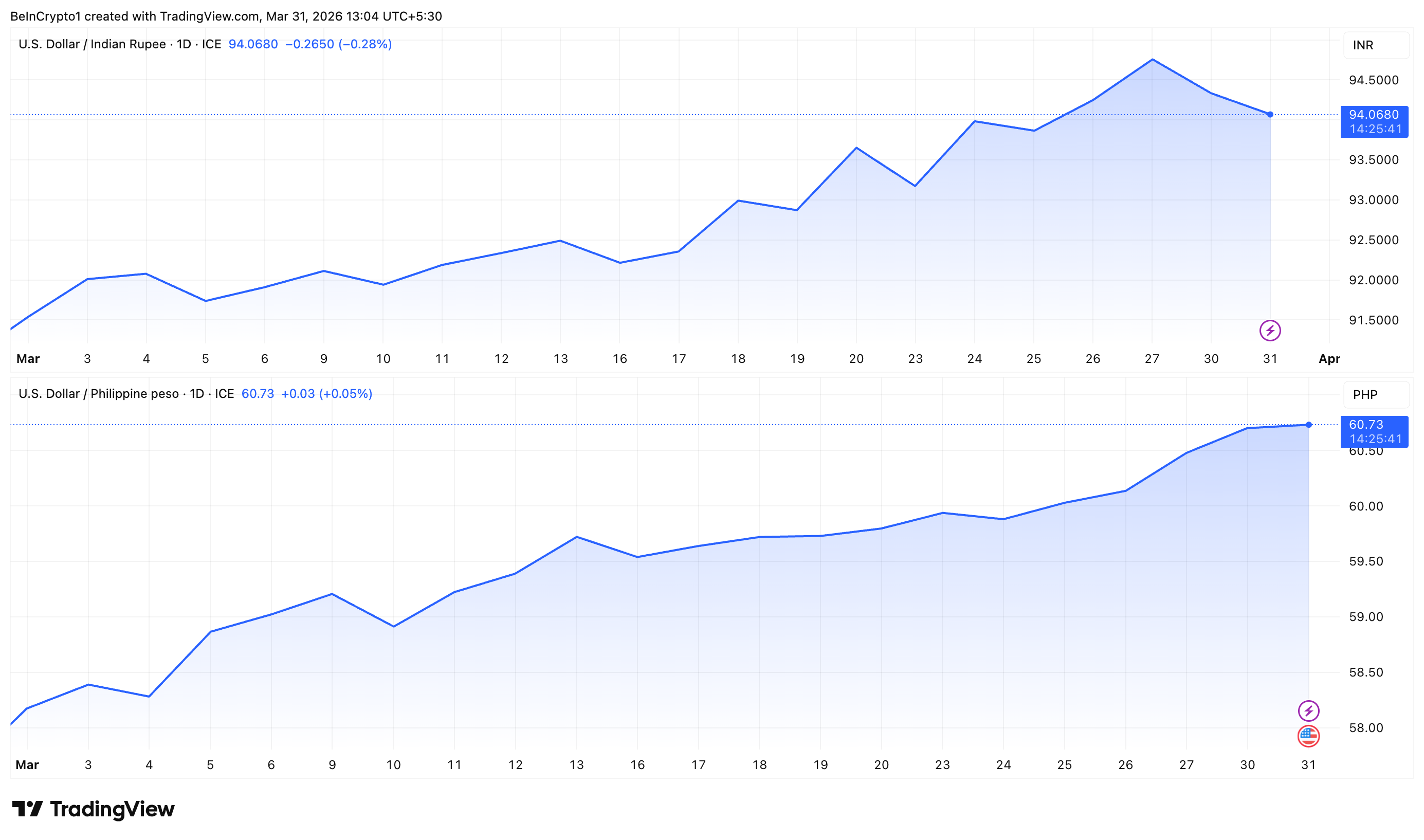
Meanwhile, India’s rupee weakened past the 95-per-dollar mark for the first time on Monday, hitting an intraday low of 95.2. The currency has dropped 11% over India’s fiscal year, marking its steepest fall since 2011-12.
The decline came despite recent steps taken by the Reserve Bank of India (RBI) to curb speculation. The bank moved to cap banks’ net open positions in the onshore forex market at $100 million per day, effective April 10.
The measure forces lenders to shrink their books and limits their ability to build large one-sided bets against the rupee. However, the step produced only fleeting relief.
According to Reuters, foreign investors offloaded more than $19 billion worth of Indian equities over the past year, with outflows hitting an all-time monthly high in March. The selloff intensified as soaring oil prices, driven by the Middle East conflict, heightened concerns about India’s economic vulnerability, which relies heavily on imported energy.
“The bottom line is that the RBI’s cap does not change the underlying dynamics that fuelled pressure on the currency,” analysts at Barclays said in a Monday note. “The INR remains particularly vulnerable to an oil supply shock, while India’s balance of payments position may deteriorate further, and capital and financial account pressures are increasing.”
With the Strait of Hormuz still largely closed to commercial traffic, both countries face growing headwinds. The coming weeks may test whether the RBI’s position caps and BSP’s selective intervention can hold the line.
Subscribe to our YouTube channel to watch leaders and journalists provide expert insights
