

The gold price recently plunged in one of the sharpest one-day declines in decades after briefly topping $5,600 per ounce. Yet, traders continue to place aggressive bets that the metal could surge to $20,000 or more.
The divergence highlights a market driven by macroeconomic forces, speculation, geopolitical uncertainty, and shifting central bank behavior.
Massive Bullish Gold Bets Despite Volatility
According to market commentary from traders and analysts, roughly 11,000 contracts tied to December $15,000/$20,000 gold call spreads have been accumulated.
“Gold $20,000 calls surge despite record selloff. Deep out-of-the-money bullish bets on gold are building even after a historic correction… The position has since grown to roughly 11,000 contracts, even with prices consolidating near $5,000,” commented Walter Bloomberg.
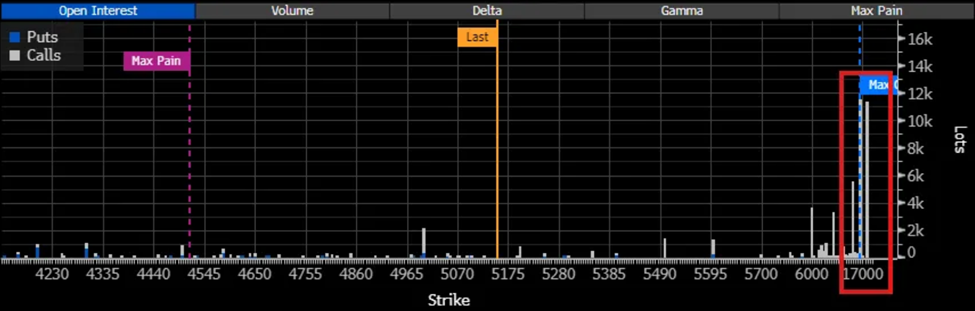
This optimism comes even as the XAU price consolidates near $5,000. The scale of these trades is striking, given the distance from current prices.
Such trades function as low-cost, high-upside wagers. For the spreads to expire in the money, gold would need to nearly triple by December, a scenario that would require a major macroeconomic or geopolitical shock.
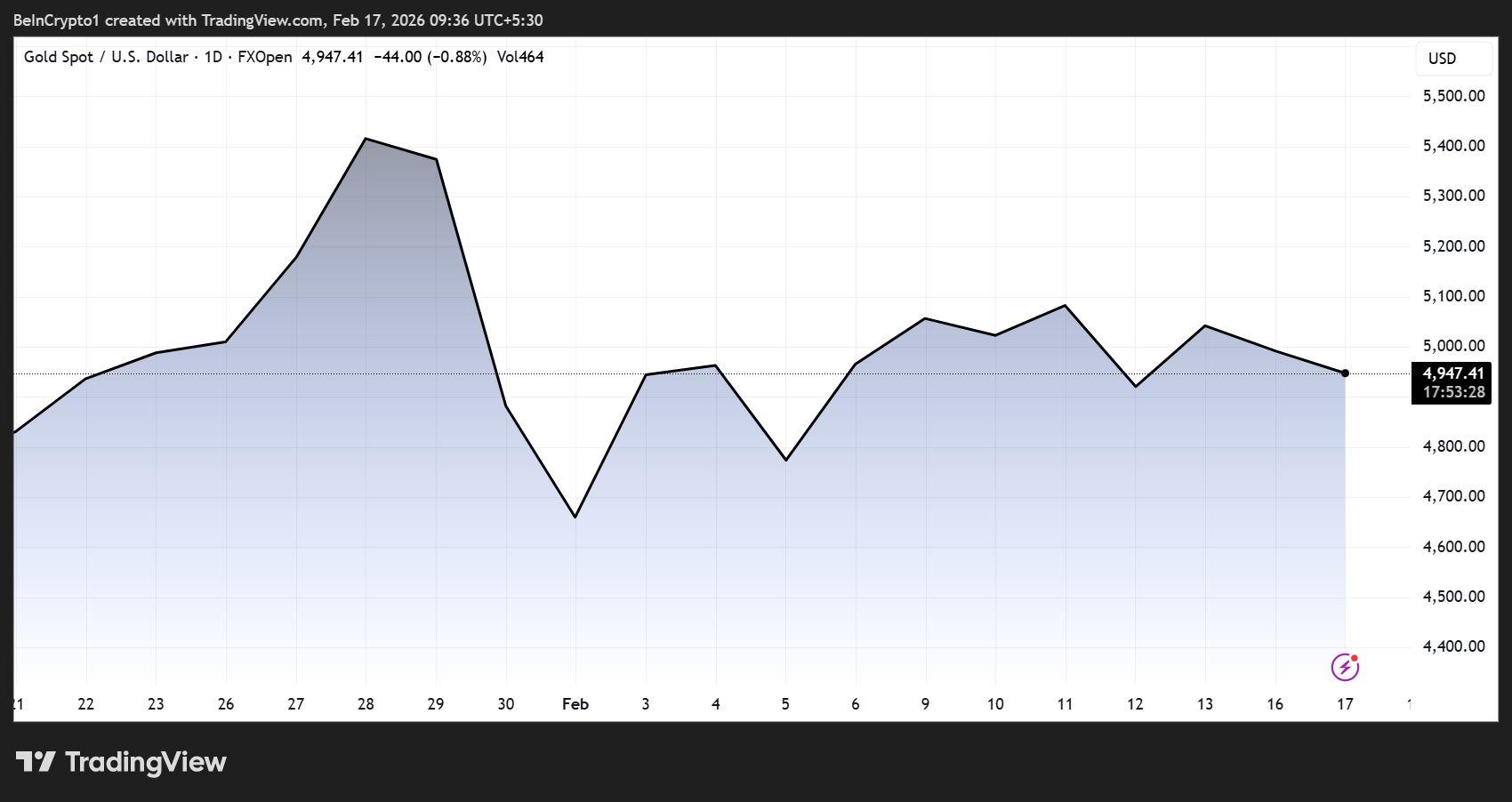
Yet the presence of these bets has already affected market forces, pushing implied volatility (IV) higher in far-out-of-the-money calls and signaling demand for extreme upside exposure.
Against this backdrop, some analysts argue that gold’s broader trajectory remains intact despite recent turbulence.
“If you start zooming out on the macroeconomic factors, then it’s quite clear that the markets of Gold haven’t peaked at all. Yes, they can peak in the short term and have a 1-2 year consolidation period, but that doesn’t mean we aren’t in a larger bull market in Gold. As a matter of fact, I think we are. That’s why I’m buying Gold in the next 30-50% dip,” expressed Macro analyst Michael van de Poppe.
This perspective reflects a growing view among macro investors that gold’s rally is tied to structural shifts in the global financial system rather than purely cyclical factors.
Bull Market or Temporary Pause as Short-Term Constraints Remain?
Despite bullish long-term narratives, near-term volatility remains high. Commodities strategist Ole Hansen recently noted that gold rebounded above $5,000 after softer US inflation data pushed bond yields lower and revived expectations for interest-rate cuts.
This suggests that while macro tailwinds exist, trading activity and liquidity conditions, particularly in China, can significantly influence short-term price moves.
A Global Speculation Wave in Metals
The bullish sentiment comes alongside a surge in speculative activity across metals markets. Trading volumes in Chinese aluminum, copper, nickel, and tin futures contracts have soared to levels far exceeding historical norms, driven in part by retail investors.
Exchanges have repeatedly tightened margin requirements and trading rules to curb excessive speculation, reflecting the scale of the frenzy.
Such conditions often amplify price swings, creating both rapid rallies and sharp corrections.
Another factor reinforcing the gold narrative is central-bank diversification. Economist Steve Hanke has pointed to China’s shift away from US Treasuries toward gold reserves, a trend widely interpreted as part of a broader move to reduce reliance on dollar-denominated assets.
This pattern has fueled speculation that gold could play a larger role in global reserves if geopolitical tensions or currency instability intensify.
However,not everyone is convinced the rally is sustainable. Commodity strategist Mike McGlone has cautioned that the metals sector may be overheating, drawing parallels to previous peaks where extreme positioning preceded corrections.
Stretched valuations, elevated volatility, and surging speculative flows could leave markets vulnerable to another sharp downturn if macro conditions shift.
