


Forget panic liquidations and FTX-style collapses. The crypto bear market of 2026 is grinding, slow, and structurally different from 2022.
There are no cascading blowups, no mass insolvencies, and no existential panic. Instead, institutions, regulators, and real-world adoption are quietly stabilizing the sector.
Institutions Anchor the Crypto Market
In previous cycles, retail traders and leverage amplified crashes. Today, institutions are the stabilizing force.
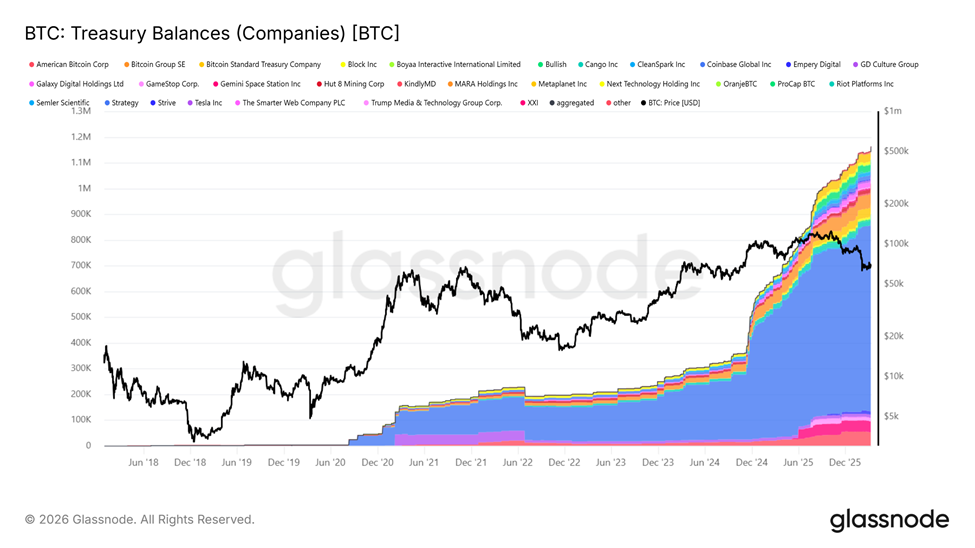
Spot Bitcoin ETFs held almost $91 billion as of this writing, according to Glassnode data, with corporate treasuries strategically hedging, and long-term holders are continuing net buying.
“The good thing this time, compared to previous cycles, is that there’s been no crypto blow-ups directly. Actually, the underlying stuff in crypto is doing really, really well now,” Geoff Kendrick, Global Head of Digital Asset Research at Standard Chartered.
Whale accumulation, declining exchange reserves, and disciplined capital flows are helping crypto avoid the chaos of 2022.
Instead of panic selling, tactical outflows are gradually repricing the market.
Regulatory Clarity and a Valuation Reset
Unlike the unregulated chaos of 2022, emerging rules such as the GENIUS Act for stablecoins and the forthcoming CLARITY Act for tokens are shifting valuations away from speculative narratives and toward cash-flow-driven models.
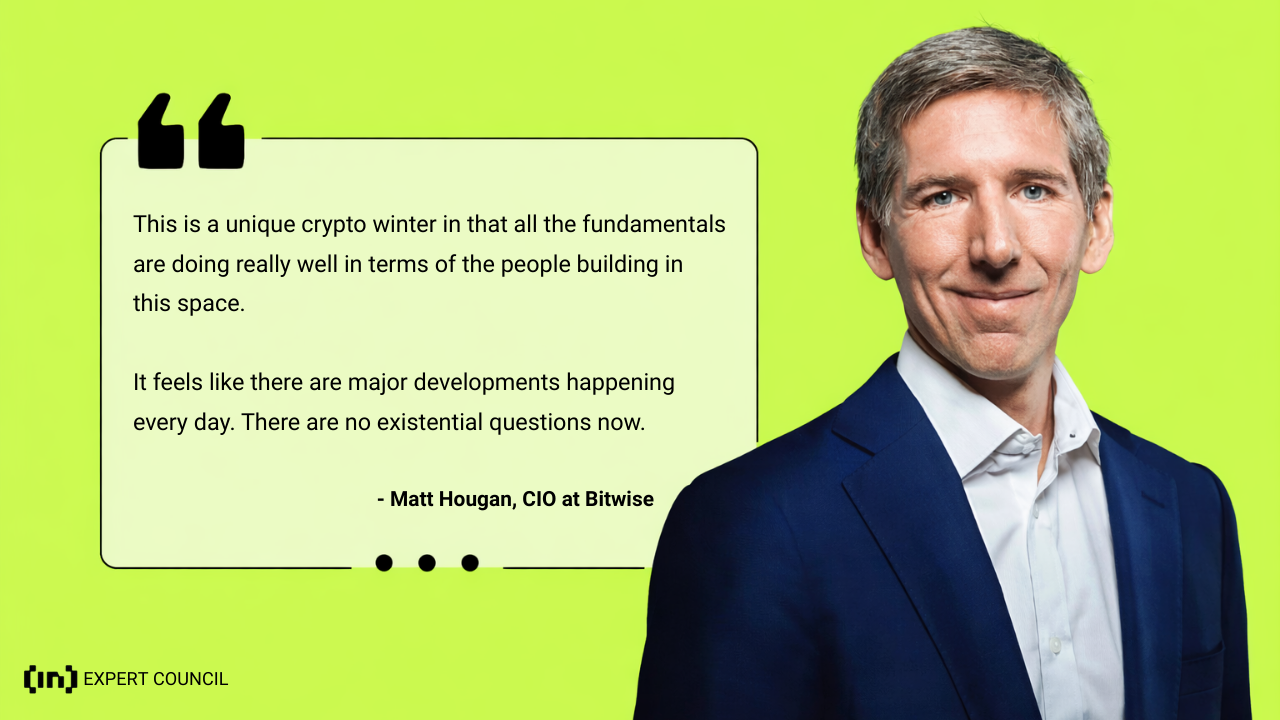
“This is a unique crypto winter in that all the fundamentals are doing really well in terms of the people who are building in this space. There are no existential questions now,” added Matt Hougan, CIO at Bitwise Asset Management.
Altcoins have been in a structural bear market since 2021, with liquidity increasingly concentrated in stronger projects.
The weak decay, while the strong compound, effectively culminating in a hallmark of maturing markets, not panic-driven collapses.
Macro Environment and Liquidity Dynamics
At the same time, global liquidity in 2026 behaves differently from 2022. Deflationary pressures, AI adoption, and more measured Fed policies mean asset corrections are asynchronous.
Growth and risk-on assets are outperforming the broader market, a stark contrast to the synchronized crashes seen four years ago.
Tactical outflows, rather than forced liquidations, maintain strong liquidity and support consolidation.
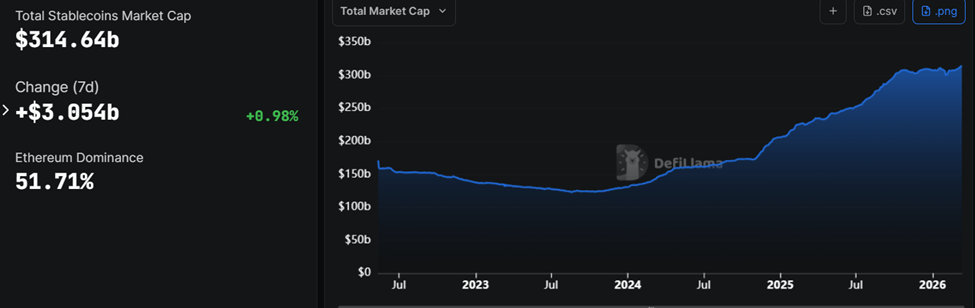
Stablecoin supply, DeFi TVL, and on-chain infrastructure remain resilient, signaling real adoption beneath the surface.
On-Chain Resilience and Usage Metrics
Indeed, despite price declines, blockchain usage continues to expand. Stablecoins are up 50%, settlement volumes up 18%, P2P up 31%, and apps up 36% in 2025.
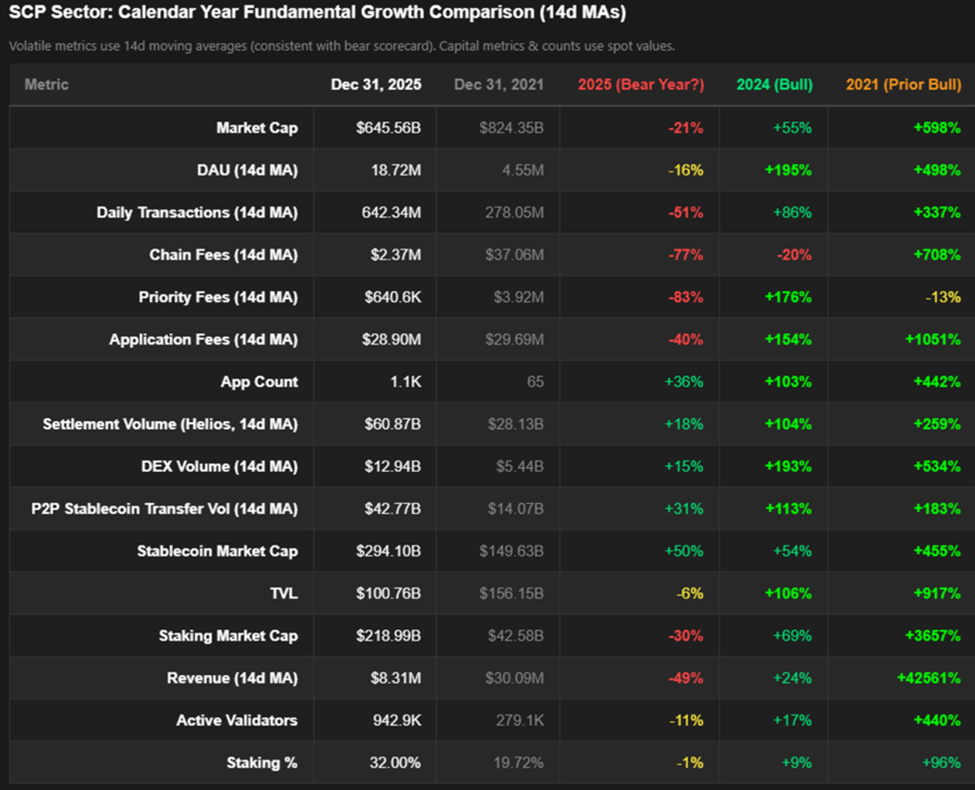
Platforms like agentic finance protocols, tokenized equities, and institutional DeFi are emerging as early catalysts. These trends suggest the market is resetting structurally, not collapsing.
“We haven’t seen any failures, any systematic failures of any businesses. It’s very, very different,” Michael Walsh told BeInCrypto during the Expert Council.
Walsh is the Chair of a Standard Chartered subsidiary and Kraken Entity.
A Two-Speed Market
The current bear is a two-speed economy in the sense that:
- Speculation has collapsed, while
- Utility continues to grow.
AI adoption and tokenization are setting the stage for a future re-rating, but flows have not yet convinced markets to reprioritize.
Recovery, if it comes, will likely be slower, selective, and adoption-driven, rather than narrative-fueled.
“All the signs of a classic crypto bear market are here, but fundamentals are growing even as tokens sell off,” observed Mike Ippolito, highlighting the disconnect between market psychology and underlying value creation.
So, What’s The Takeaway?
While drawdowns of 60–70% remain possible, the 2026 crypto bear is more resilient, institutionally anchored, and fundamentally oriented.
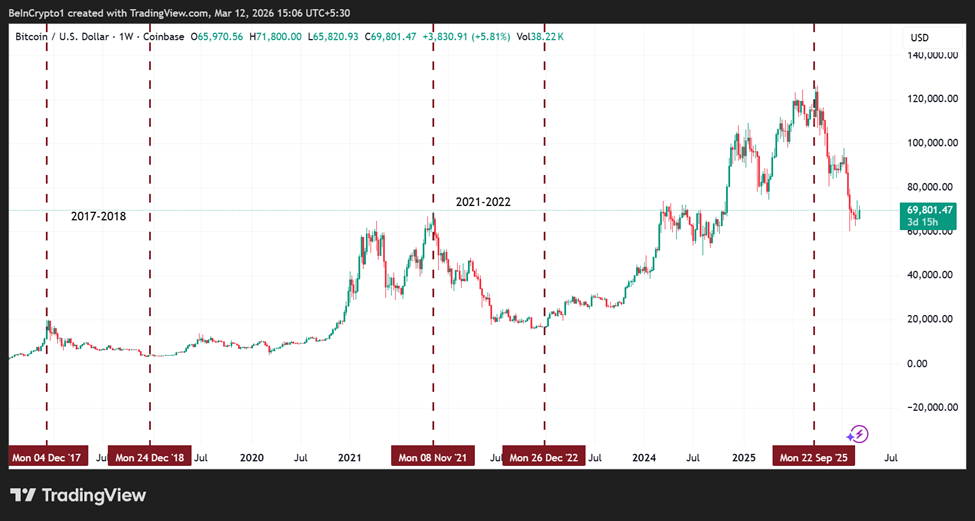
It appears more like a market reset, rather than a systemic collapse. Institutions, early adopters, and developers are quietly laying the foundation for a potential rebound, making this bear market markedly different from the chaos of 2022.
