

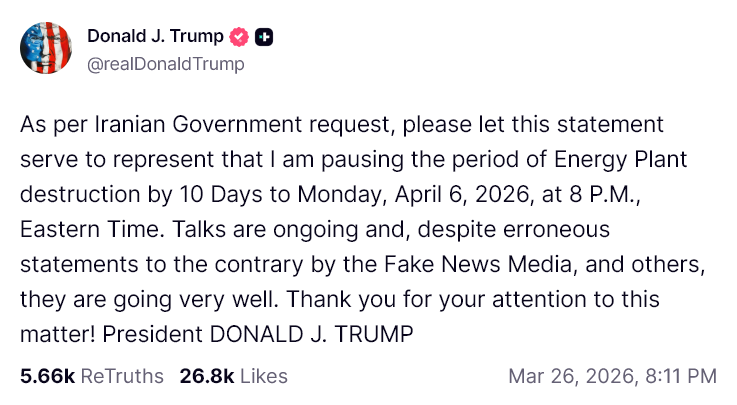
President Donald Trump’s decision to pause attacks on Iran for 10 days has not brought clarity to crypto markets. Instead, it has extended uncertainty—and Bitcoin is already reacting.
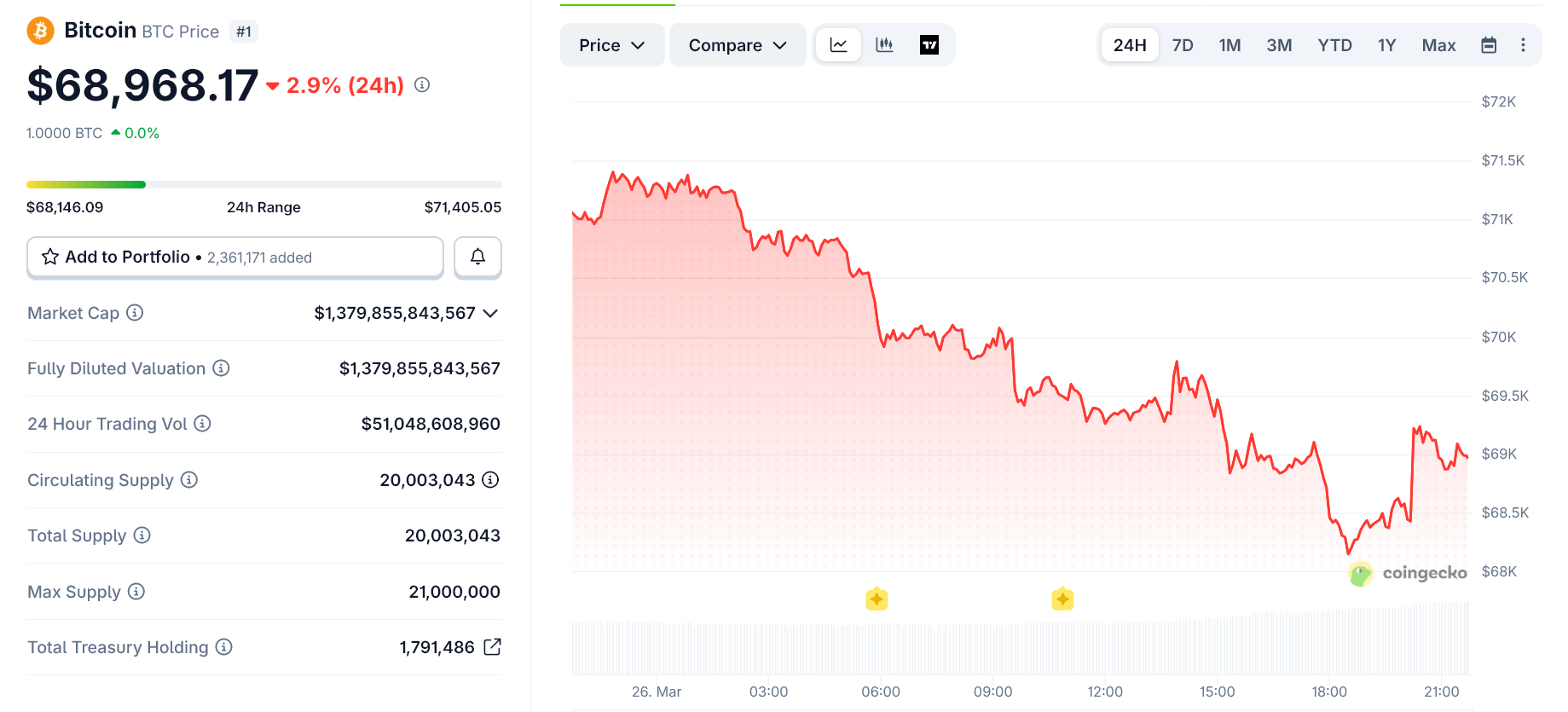
Bitcoin traded near $68,900 on March 26, down roughly 3% over 24 hours, with the chart showing steady selling pressure throughout the day. The move reflects a broader shift, not a crypto-specific event.
The real driver sits in the bond market.
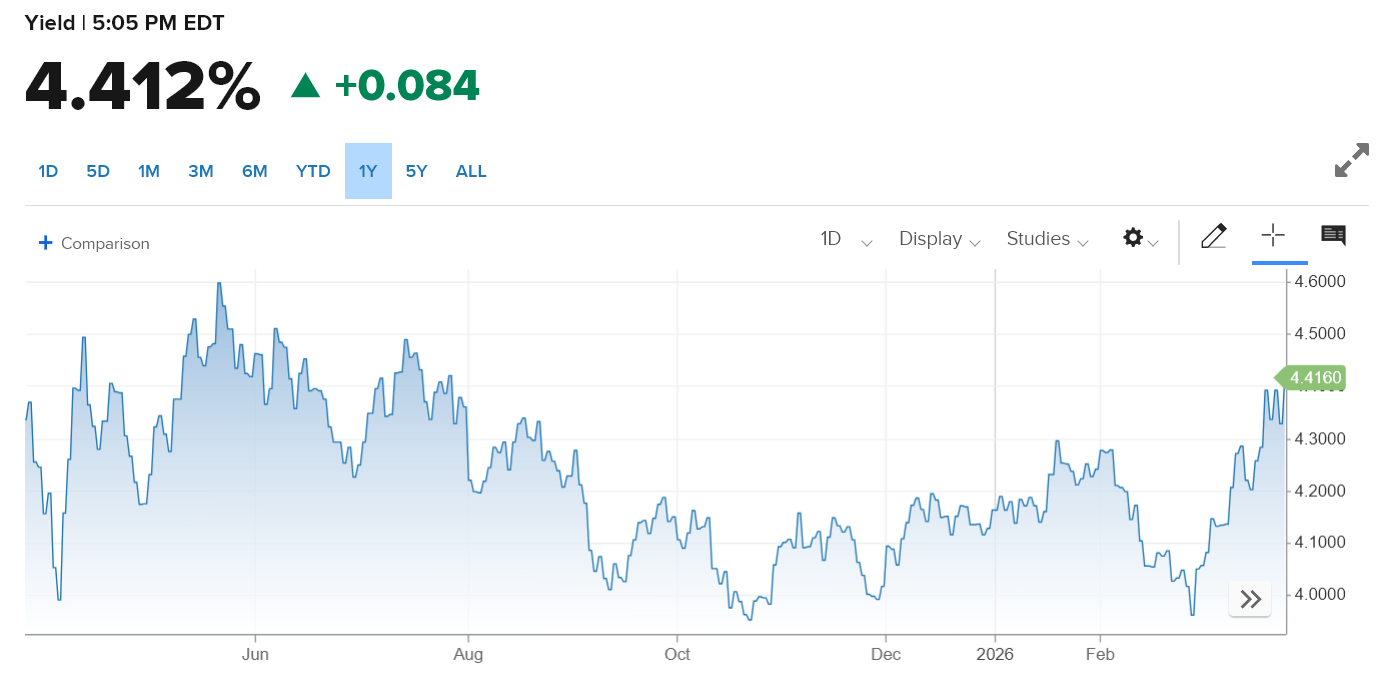
US Treasury yields climbed to around 4.42%, signaling that investors expect higher inflation and fewer chances of near-term rate cuts.
That matters because crypto, especially Bitcoin, remains highly sensitive to liquidity conditions. When yields rise, capital becomes more expensive and less money flows into risk assets.
In simple terms, higher yields pull liquidity out of crypto.
At the same time, the Iran conflict continues to support elevated oil prices. That increases inflation risk, which further reduces the likelihood of Federal Reserve easing.
Markets have already started pricing out expected rate cuts, tightening conditions even more.
This creates a difficult setup for Bitcoin in the short term.
Unlike earlier narratives where Bitcoin acted as a hedge, it is currently trading more like a high-risk asset alongside tech stocks.
As yields rise and uncertainty persists, investors tend to reduce exposure to volatile assets first.
Trump’s pause removes immediate escalation risk but does not resolve the macro pressure.
For crypto, that means one thing: until yields stabilize and liquidity returns, Bitcoin is unlikely to see a sustained move higher and may remain stuck—or drift lower—in the near term.
