


Russian businesses trading with Iran developed a layered system of crypto transfers, hawala settlements, and borderless barter arrangements to recover revenue that Iran’s official exchange rate structure would otherwise eliminate.
Sergey Mikheev, Director of Business Development at BiyskKotloStroy (boiler engineering & construction), told BeInCrypto in an exclusive interview with Evgeniya Likhodey.
The Exchange Rate Gap That Made Normal Business Impossible
The system, which Mikheev describes as fully operational before June 2025, has since been suspended.
A military conflict that began that month halted every cross-border transaction his firm had built, leaving completed infrastructure, signed counterparty agreements, and mapped logistics corridors idle.
To understand why Russian exporters needed workarounds, the structure of Iran’s currency system matters.
Iran does not operate a single exchange rate. It runs several simultaneously:
- Official Central Bank rate
- Market rate, and
- Separate business rate, with significant gaps between them.
In May 2024, the market rate stood at 1,100,000 rials per dollar. The Central Bank’s official purchase rate was 600,000 rials, which is roughly half.
Iranian buyers could only acquire foreign currency through the Central Bank, and only after the imported goods had physically arrived in their warehouse.
A transaction passport was then issued, permitting the currency purchase at the official rate. The result was a predictable and unavoidable loss on every export transaction.
“The market rate is 1,100,000 rials per dollar, and the Central Bank purchase rate is 600,000. Add VAT on both sides, customs duties. Total average losses on an export transaction came to around 40%,” Mikheev told BeInCrypto in an interview.
The distortion extended into customs processing. In one case Mikheev described, goods valued at 178,000 rubles were assessed for tax at 600,000 rubles. This meant a tripling of the taxable base driven entirely by the gap between market and official rates.
Large Russian companies largely absorbed these conditions. They waited for dollar settlements to arrive through standard banking channels, a process that could take up to six months.
“Large companies didn’t use crypto; they waited for currency. And they could wait up to 6 months for dollars, which would then be deposited into a bank account. Russian banks don’t want rials; they don’t accept them at market rates,” Mikheev added.
For smaller operators, that wait was not viable. They needed a working alternative.
How Crypto Entered the Payment Chain
It was at this point that crypto became the practical instrument for companies unwilling to absorb either the six-month wait or the 40% exchange rate loss. The route that worked ran through the UAE.
A Russian company would sign a contract denominated in dollars, pay in rubles, and engage an intermediary agent in the Emirates.
That agent converted the rubles to crypto and executed the cross-border transfer to the Iranian side.
The structure kept the transaction formally compliant with Russian tax requirements. Payments flowed through a UAE-based intermediary services contract, not directly in crypto.
“You sign a contract, pay in rubles, and an agent in the Emirates converts to crypto and processes the payment. Everything is official, taxed properly. The scheme works, but it’s risky. You need to know the people you’re working with very well,” Mikheev articulated during the interview.
Mikheev’s firm did not work through organized exchanges. Contact was with individual crypto traders.
Certain tokens were accepted by Iranian currency traders at a minimal discount, with crypto transaction blocks avoided partly by keeping initial volumes small while trust was being established.
Cash remained a parallel option for the smallest transactions, but carried its own exposure at border crossings.
“Some people carry cash currency, and that actually works,” Mikheev said.
Hawala: Ancient System, Modern Risk
The hawala system, an informal value transfer network with documented use across the Middle East and Central Asia stretching back centuries, offered a third path.
Under hawala, a sender hands cash to a local intermediary. That intermediary communicates a code to a counterpart in Iran.
The recipient collects the equivalent sum minus commission, with no funds physically crossing a border at any point.
The appeal is clear. The limitation, as Mikheev describes it, is structural.
“Hawala has a systemic risk: intermediaries are honest on small amounts. When you bring a lot of money, the temptation to disappear increases sharply,” Sergey Mikheev explained.
For moderate transaction volumes, hawala functioned. Scaling it required a level of personal trust that took years to establish and could not be easily replicated with new counterparties.
The Zero-Transfer Settlement System
The most architecturally sophisticated solution Mikheev’s firm developed was a settlement structure in which money never crossed a border at all.
The system used Iranian bank accounts maintained by both an export-side and import-side company under Russian ownership.
For exporters, the mechanism worked as follows: Mikheev’s firm purchased the goods from the Russian exporter at a ruble price, then sold those goods directly to Iranian buyers from its Iranian account.
The Russian exporter received rubles domestically, avoiding any exposure to the exchange rate gap entirely.
For importers, the process reversed. Rial revenue accumulated in the Iranian account from export sales. That revenue was used to purchase Iranian goods, which were then sold to Russian importers for rubles inside Russia.
“If you’re exporting, we effectively buy the goods from you and return rubles to you, while we sell to the Iranians ourselves. All the risk is ours. For importers, the reverse: we accumulate revenue in rials, use it to buy Iranian goods, and sell them to Russian importers for rubles. Money never crosses the border,” he stated.
The structure also generated a value-added tax refund on the Russian side, a benefit Mikheev’s firm shared with clients as part of the commercial arrangement.
Export losses, he said, dropped from 40% to near zero.
The scheme was complete. Counterparty agreements had been signed. Then the war started.
“If it weren’t for the war that started in June 2025, the scheme would already be fully operational. We offered partners a way to avoid losing that 40% of foreign currency revenue, and we also shared the VAT refund with them. War ends, we’ll go back to it,” Mikheev told BeInCrypto interview.
Iran’s Logistics Value, and What the War Destroyed
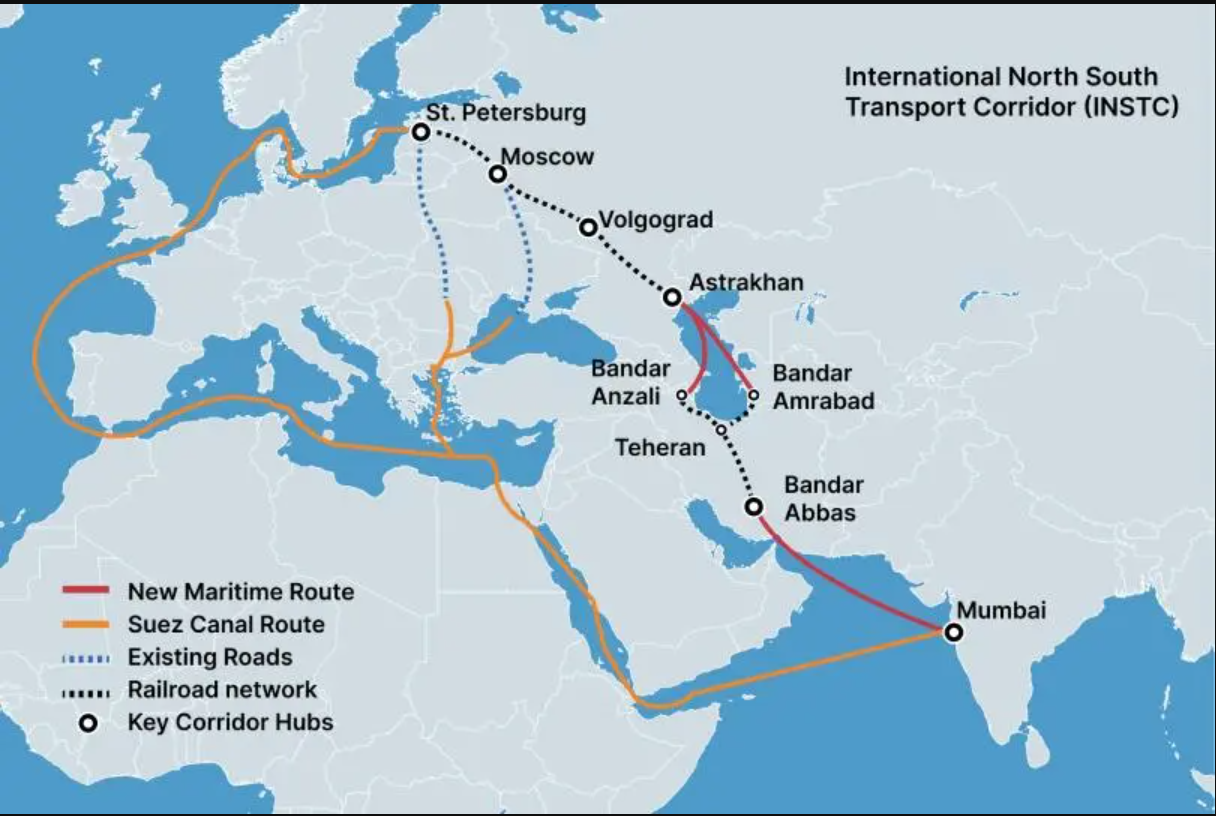
The payment architecture existed alongside a logistics argument that was equally compelling. Iran had functioned as a cost-efficient transit corridor for goods moving between Russia, China, and East Africa.
This role depended on cheap domestic fuel, a competitive private trucking sector, and port access on both the Persian Gulf and the Caspian Sea.
The numbers Mikheev cites make the case directly.
“Logisticians offered a container from China to Moscow for $8,000. Via Bandar Abbas and Enzeli to Astrakhan it came to around $3,000, plus another $2,000 by road to Moscow,” Mikheev explained.
The cost differential came primarily from Iran’s subsidized fuel system. Vehicle owners receive a government fuel quota at no cost; consumption above that quota is priced at figures that translate to near-zero in international terms.
Private trucking operates as a large small-business sector with minimal state interference in round-trip vehicles, keeping rates competitive.
Booking vehicles for round trips, outbound from Bandar Abbas to Enzeli, return from Enzeli to Bandar Abbas, compressed costs further.
Mikheev’s team had also completed routing analysis for East African trade. Goods from Ethiopia currently travel via the west coast of Africa and through Novorossiysk, a slow, expensive path.
A route through Tanzania, across to Iran, and north to Astrakhan saved approximately 1.5 weeks in transit time and cut freight costs by half.
The UAE’s role as the financial relay point in Mikheev’s crypto settlement structure has also been disrupted.
He described the Emirates as the world’s leading crypto infrastructure hub before the conflict. As it were in that jurisdiction, crypto could be used for everyday retail transactions, far ahead of the US or UK in practical adoption.
Strikes on data centers, he said, have caused significant damage to that infrastructure.
Mikheev is waiting. The agreements are in place. The question, as he puts it, is which counterparties will still be there when conditions allow him to return.
“The whole scheme was fully built out, both the transport and the financial side. Agreements with counterparties had been reached. The only question is how many of them will survive this war. As soon as the shooting stops, I’m flying there,” the BiyskKotloStroy executive concluded.
