

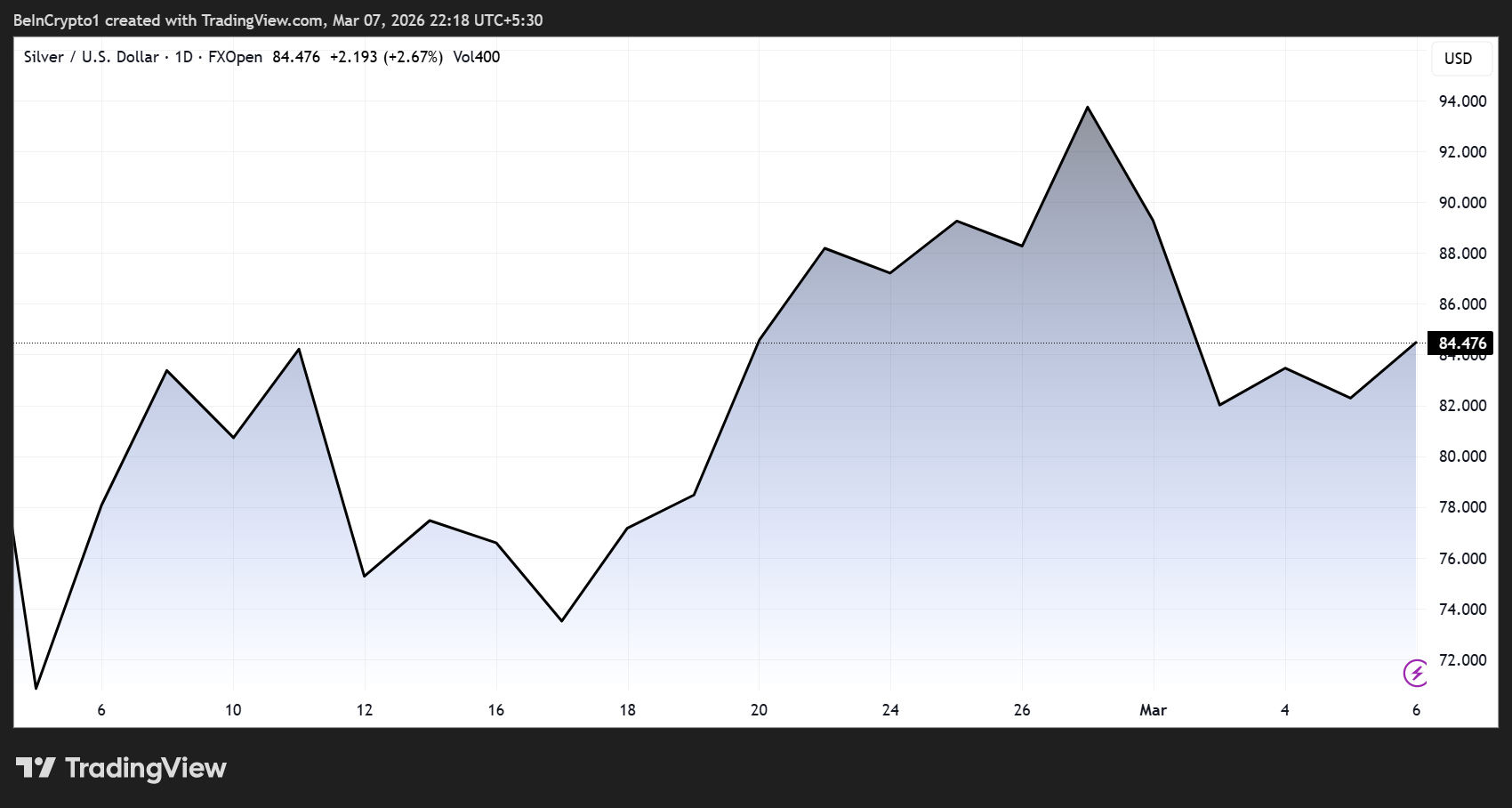
Silver prices have surged roughly 17% over the past month, climbing from around $72 in early February to highs near $94 before stabilizing around $84 as of this writing.
The rally has coincided with escalating geopolitical tensions and supply concerns, prompting arguments that modern warfare is quietly consuming one of the world’s most important industrial metals.
Silver Surges After Iran War Erupts, Robert Kiyosaki Says Rockets Are Burning the Metal
Investor and author Robert Kiyosaki says rockets used in conflicts involving Iran and Israel can contain significant quantities of silver.
According to the renowned investor, each rocket may carry between half a pound and four pounds of the metal, which disappears when the weapon detonates.
“TRAGICALLY: War is profitable,” Kiyosaki wrote, reflecting on his own service during the Vietnam War. “Today, every rocket fired at Iran or Israel is carrying a half pound to four pounds of silver… that disappears when the rocket goes boom. Silver stackers get richer as people on both sides pay the price in blood, sweat, tears, and money.”
Silver’s Role in Modern Warfare
Silver’s industrial properties make it essential for modern weapons systems and advanced technologies. The metal is one of the best electrical conductors, making it critical for missiles, satellites, electronics, and other high-performance military components.
“It is now a national security infrastructure. You cannot build missiles, satellites, AI systems, solar grids, weapons platforms without silver,” noted Jim Fergusson, a British political commentator, activist, and entrepreneur.
Macro analyst Dario Perkins highlighted the scale of that demand, noting that the production of a single Tomahawk missile may require roughly 500 ounces of silver.
That level of consumption means that sustained conflicts can quietly absorb significant quantities of the metal. This is particularly as modern warfare increasingly relies on advanced electronics and precision systems.
War and Supply Risks Fueling the Rally
The recent rally in silver prices has also been driven by geopolitical tensions involving the US and Iran, which have heightened safe-haven demand for precious metals.
At the same time, traders are closely watching supply disruptions in Mexico, the world’s largest silver producer.
The country accounts for roughly 24% of global silver output, meaning any instability affecting mining operations could ripple across global markets.
Commodity analysts note that silver has also faced structural supply constraints for years. According to market data from analysts, the silver market has recorded five consecutive years of deficits as industrial demand continues to outpace new supply.
“We are running 5 consecutive years of silver deficits – Military demand for silver is rising – Silver has been classified as a strategic metal. Silver inventories and prices are going to get squeezed,” added analyst Lukas Ekwueme.
Solar Boom Adds to Demand
Beyond defense and geopolitics, the global energy transition is placing additional pressure on silver inventories.
Demand from the solar industry has grown dramatically, with photovoltaic consumption rising from about 82 million ounces in 2016 to nearly 198 million ounces by 2024.
Projections suggest that solar demand alone could reach 320 to 450 million ounces by 2030, potentially accounting for roughly half of current global production.
This surge reflects silver’s critical role in photovoltaic cells, which rely on the metal’s conductivity to convert sunlight into electricity.
A Dual-Role Commodity
The convergence of these trends has given silver a unique position in global markets. Unlike gold, which primarily acts as a store of value, silver serves both as a safe-haven asset during geopolitical crises and a key industrial input for advanced technologies.
As conflicts intensify and demand for clean energy and defense industries grow, the metal’s strategic importance could continue to reshape global supply dynamics.
According to Robert Kiyosaki, the implications are stark. Modern wars go beyond weapons and strategy to include resources that quietly disappear on the battlefield.
