


The petrodollar system, a global financial arrangement in which most international oil trade is priced and settled in US dollars, faces growing threats amid the US-Iran war.
Under this system, countries that import oil must hold US dollars to pay for it, creating a constant global demand for the currency and reinforcing its role as the world’s dominant reserve currency.
Petrodollar System Faces Mounting Pressure Amid Gulf Disruptions
According to The Wall Street Journal, the United Arab Emirates has initiated discussions with the United States over a potential financial safety net amid escalating risks from the Iran conflict.
Officials said Central Bank Governor Khaled Mohamed Balama raised the possibility of a currency swap line in meetings with Treasury Secretary Scott Bessent and Federal Reserve officials in Washington.
The talks come as the conflict has disrupted Emirati energy infrastructure and constrained oil exports through the Strait of Hormuz, limiting dollar inflows.
While the UAE has not made a formal request, officials framed the discussions as precautionary. Nonetheless, they also noted that US military action against Iran “entangled their country in a destructive conflict whose effects may not be over.”
“Emirati officials told the US officials that if the UAE runs short of dollars, it may be forced to use Chinese yuan or other countries’ currencies for oil sales and other transactions, some of the officials said. In that scenario is an implicit threat to the US dollar, which reigns supreme among global currencies, partially because of its near-exclusive use in oil transactions,” the WSJ reported.
Subscribe to our YouTube channel to watch leaders and journalists provide expert insights
In parallel, alternative settlement practices have already emerged. Reports indicated that, in early April, Iran was charging commercial vessels transit fees through the Strait of Hormuz in yuan.
“While it is unclear how many vessels have made payments in yuan, at least two had done so as of March 25,” Al Jazeera reported, citing Lloyd’s List.
Tehran had also signaled plans to extend these measures to digital assets, including levying Bitcoin-based tanker transit fees as part of a broader effort to bypass traditional financial channels.
All of these developments point to a growing structural threat to the petrodollar system. However, pressure on the system predates the current conflict.
Deutsche Bank noted that US sanctions on oil exports from Russia and Iran had already led to parallel trading networks that increasingly rely on non-dollar currencies, such as the Chinese yuan.
Yuan Shift Could Challenge Dollar’s Dominance
Previously, several experts raised concerns about the dollar’s dominance. Bridgewater founder Ray Dalio warned that failing to secure Hormuz could sharply raise the risks to the dollar’s reserve status.
Similarly, Balaji Srinivasan argued that an Iranian victory could accelerate the end of multiple geopolitical and financial eras, including the petrodollar system.
Meanwhile, Harvard economist Kenneth Rogoff projects that the Chinese yuan could emerge as a global reserve currency within five years, citing growing investor demand to diversify away from the US dollar.
Follow us on X to get the latest news as it happens
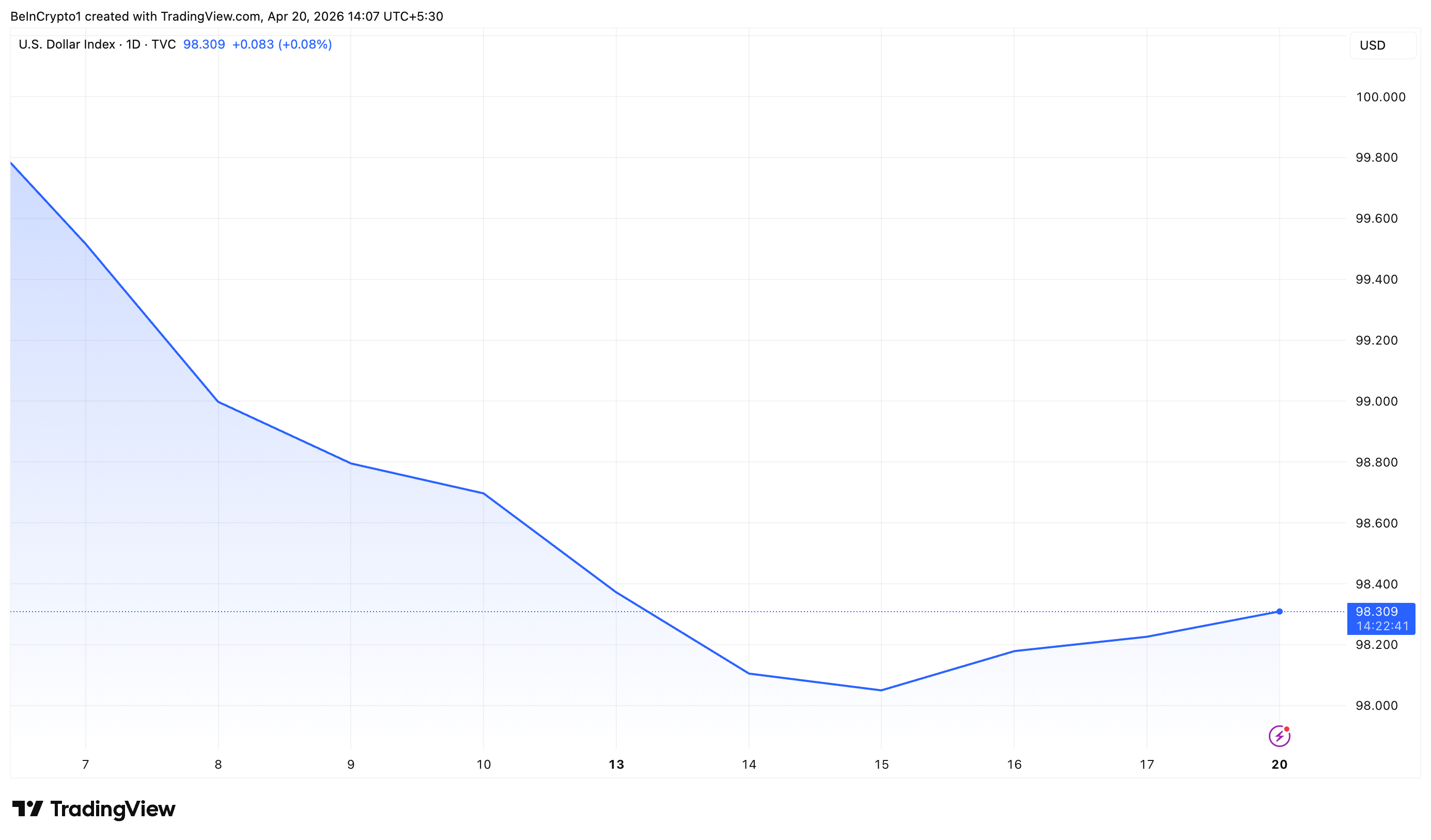
Despite these long-term concerns, short-term market dynamics continue to offer intermittent support to the dollar. The dollar index dropped nearly 2% between April 7 and 15 after the US-Iran ceasefire announcement.
However, renewed uncertainty around the war pushed oil back up, reviving the petrodollar effect.
For now, geopolitical tensions are sustaining the petrodollar’s relevance. Yet, structural shifts beneath the surface raise questions about its long-term durability.