


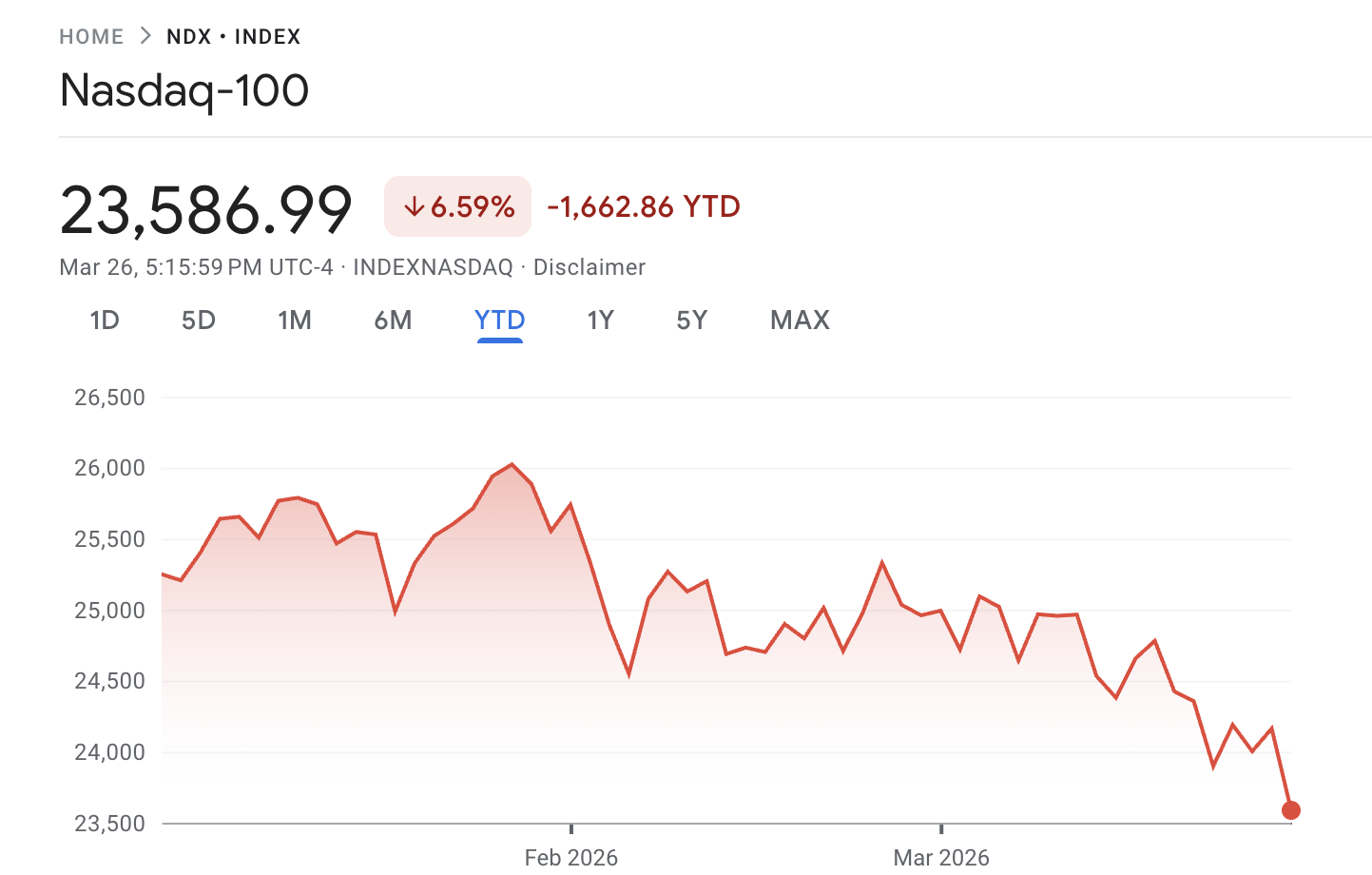
The Nasdaq-100 has dropped around 6.6% so far in 2026, yet recent signals suggest a recovery may not be far off.
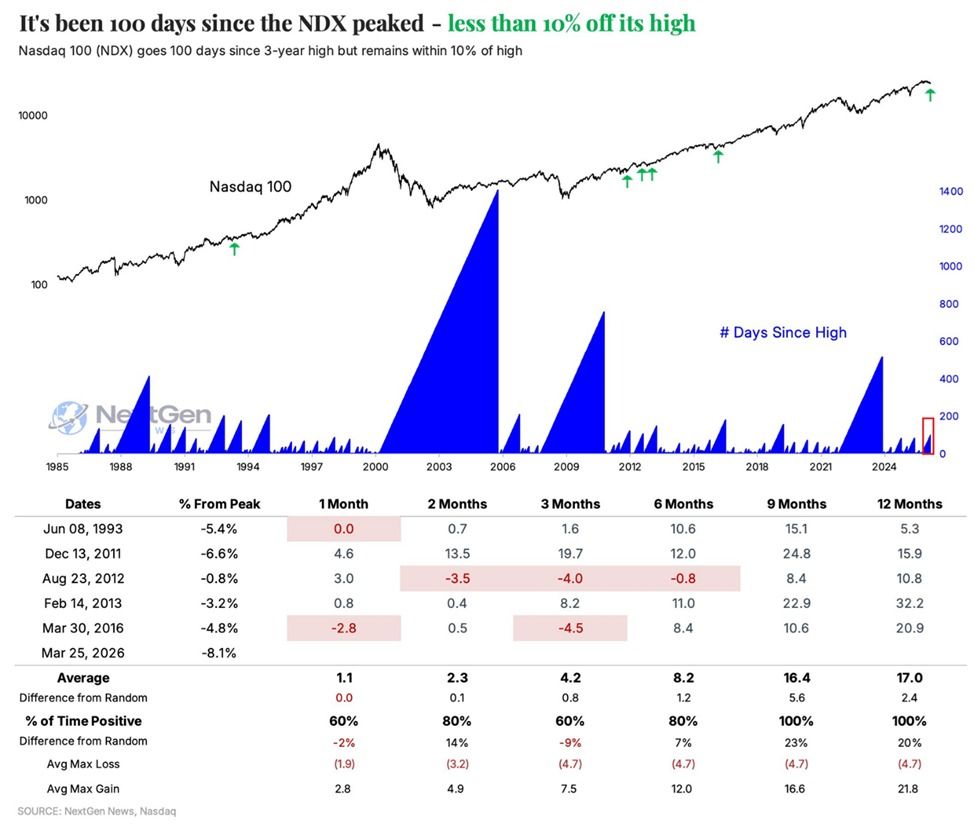
The Kobeissi Letter highlighted that the index has spent 100 consecutive trading days below its all-time high, the longest such streak since 2023.
Moreover, the Nasdaq-100 remains within 10% of its peak, a pattern that has occurred only 6 times since 1985. The historical track record for this setup is notably bullish.
The post added that in the five prior instances, the index posted flat or positive returns 80% of the time after a month, averaging a gain of around 1.1%. At the two-month mark, the results were similar, positive 80% of the time with an average return of 2.3%.
Most striking, the index was higher a year later in every single case, delivering an average gain of 17%.
“History suggests technology stocks are set to recover soon,” the post read.
Follow us on X to get the latest news as it happens
Pension Fund Inflows and Earnings Support
In a separate post, The Kobeissi Letter noted that Goldman Sachs estimates US pension funds will purchase $13.8 billion in equities by the end of the quarter. That figure exceeds 97% of all monthly purchases over the past three years and 93% of monthly buys since January 2000.
For context, pension funds have sold an average of $1.8 billion per month since 2000. The all-time high for monthly equity purchases was $80.6 billion in 2020, during the pandemic.
“This comes as US pension funds are set to rebalance from bonds to equities to maintain target allocations after the recent decline in stocks. As a consequence, an equivalent amount of bonds will be sold to fund the purchases. Equities are set for large inflows,” the analysts said.
Meanwhile, Jurrien Timmer, Director of Global Macro at Fidelity, offered a supportive fundamental case. Timmer argued that the Magnificent 7 stocks, which represent a significant share of the index’s market capitalization, remain supported by strong earnings growth.
Thus, the catalysts are lining up, but whether historical patterns and institutional flows translate into a sustained rally remains to be seen.
