

Iran has laid out preliminary ceasefire demands that include war reparations, formal control of the Strait of Hormuz, and no restrictions on its ballistic missiles.
A US official called the conditions “ridiculous and unrealistic,” according to the Wall Street Journal. The terms surfaced as Washington deployed thousands of additional troops to the region, deepening Tehran’s suspicion that diplomacy is a front for military escalation.
Trust Deficit Widens as Troops Pour In
Iranian officials told mediators in Pakistan, Egypt, and Turkey that US troop movements have increased their belief that Trump’s peace proposal is a ruse, Axios reported.
Several fighter jet squadrons and elements of the 82nd Airborne Division are set to arrive in the Middle East in the coming days.
The Kobeissi Letter noted that Iranian officials expect two to three more weeks of war even if talks proceed. Senior military adviser Mohsen Rezaei stated the conflict will continue until Tehran receives full compensation for the damage sustained.
Oil and Crypto Feel the Pressure
Brent crude climbed back above $100 per barrel on Wednesday after an 11% sell-off the previous day. As of this writing, spot Brent crude oil traded for $98.87 amid ongoing profit booking.
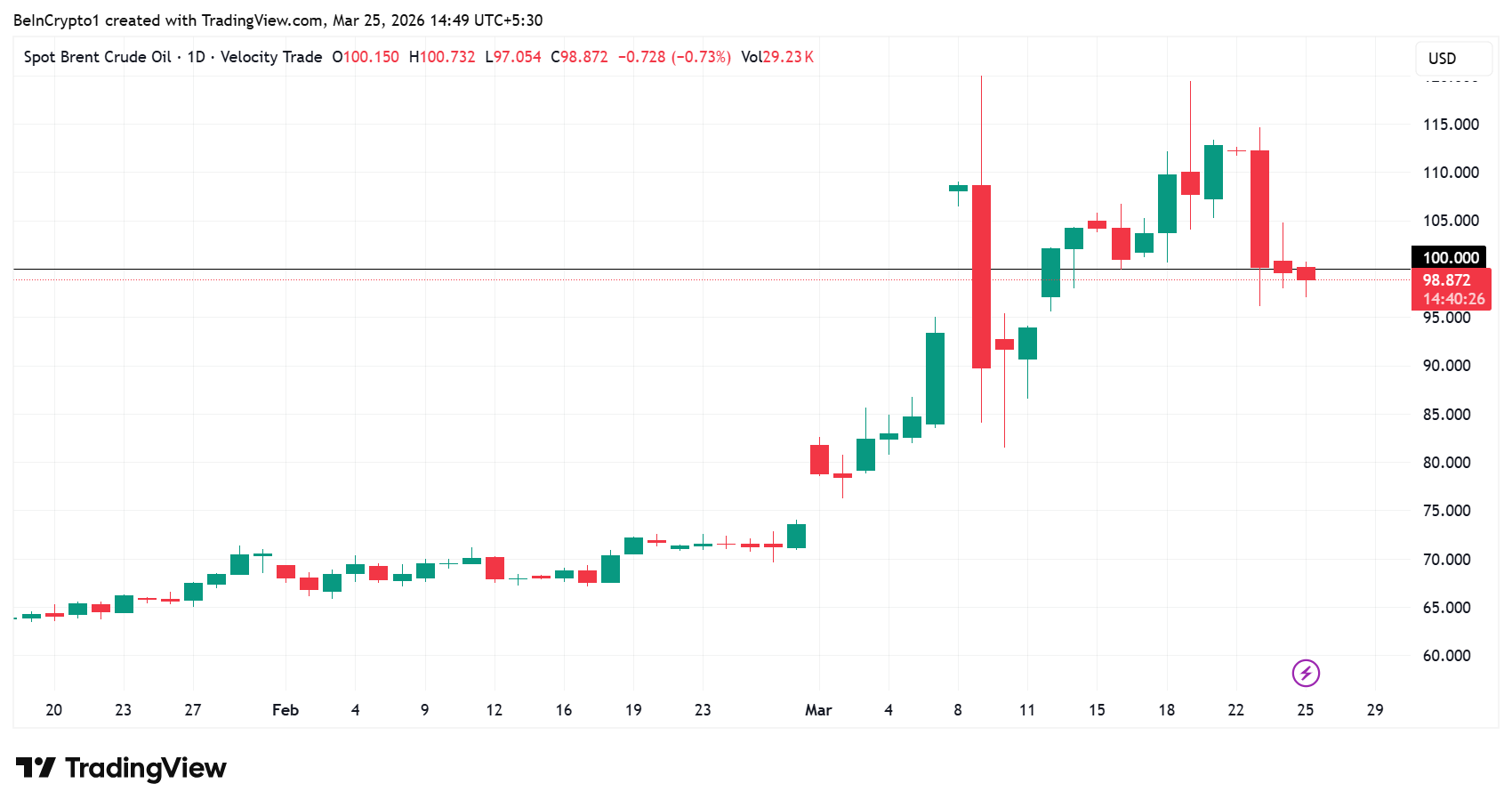
Goldman Sachs warned that prices could surpass the 2008 all-time high of $147.50 if Hormuz disruptions persist, and raised its 2026 Brent forecast to $85 from $77.
Meanwhile, Saxo Bank’s Ole Hansen noted that underlying tightness was building across commodities, from refined fuels to gas, helium, and fertilizers.
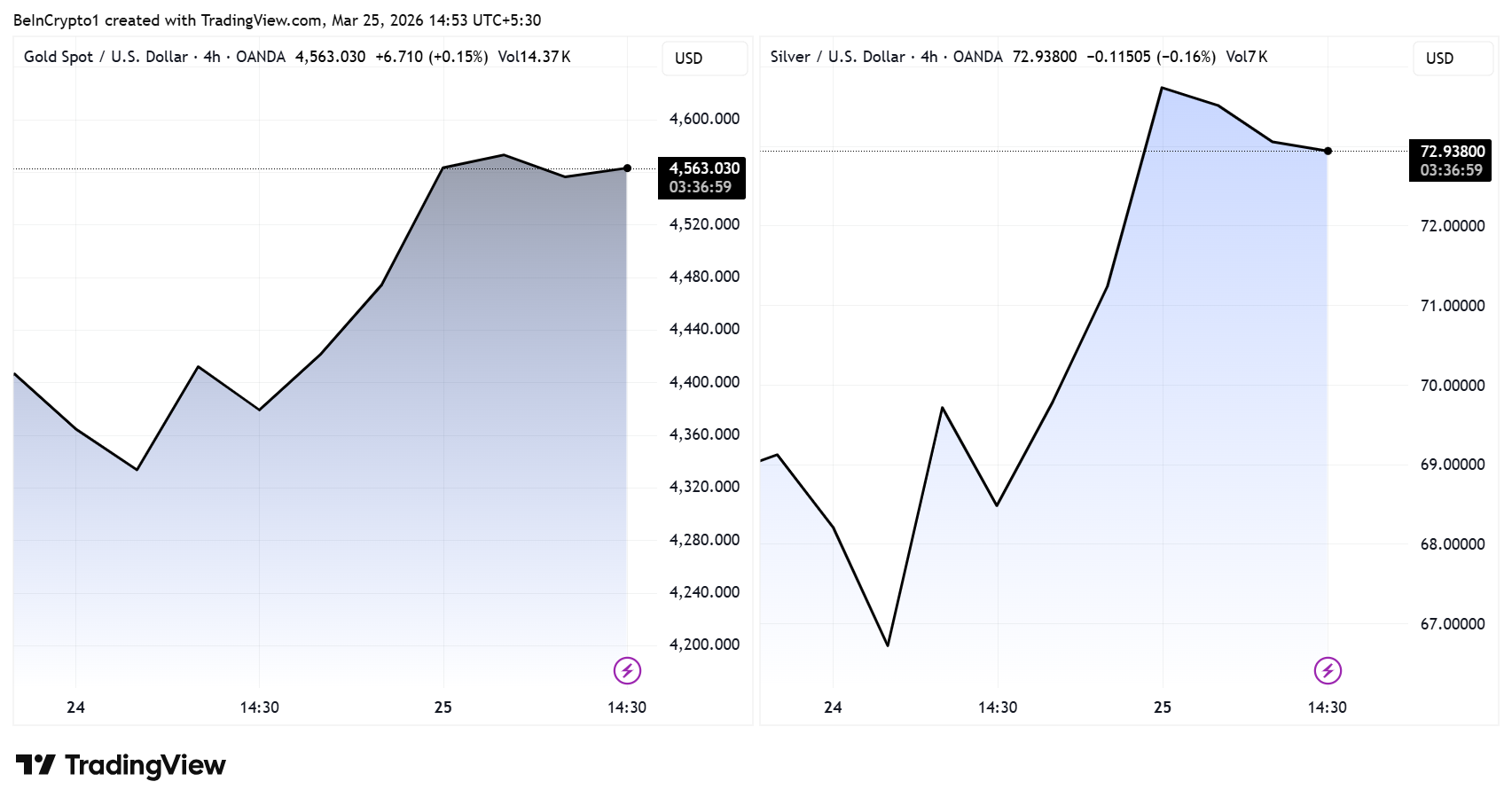
Gold and silver also gained ground, suggesting the recent metals sell-off was primarily a liquidity event.
Bitcoin (BTC) traded above $71,300 on March 25, recovering from a dip below $68,000 earlier in the week. Elevated oil prices continue to feed inflation expectations, which have pushed Goldman Sachs to delay its projected next Fed rate cut from June to September.
Tighter monetary conditions weigh directly on risk assets, and BTC has traded as one throughout the conflict.
With Iran setting terms Washington has already rejected and US troop deployments accelerating, the path to de-escalation remains narrow.
