


Grayscale’s head of research, Zach Pandl, argues that Bitcoin’s (BTC) quantum challenges are “more social than technical,” with a key hurdle being community consensus.
In a recent blog post, Pandl noted that Bitcoin has lower engineering risk than other cryptocurrencies. It uses a UTXO model, proof-of-work consensus, no native smart contracts, and certain address types aren’t quantum vulnerable if not reused after spending.
Bitcoin’s Lost Coins Could Become Its Biggest Quantum Headache
The core problem centers on Bitcoins, where the private key has been lost or is otherwise inaccessible. These include an estimated 1 million BTC attributed to Satoshi Nakamoto, worth approximately $68.9 billion at current prices.
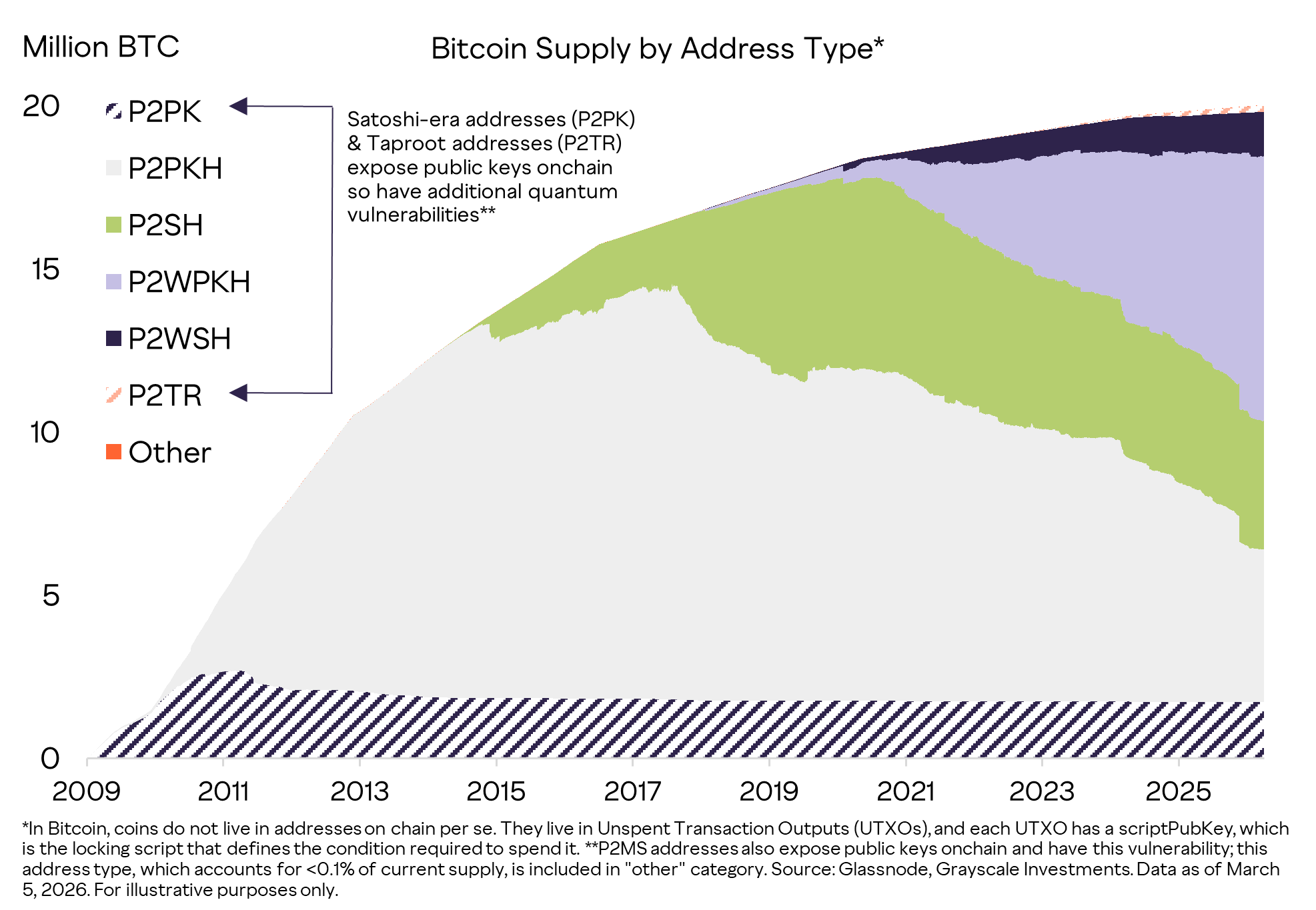
Because no one controls those keys, no one can migrate the funds to quantum-resistant formats. Pandl outlined three possible responses for the Bitcoin community.
It could permanently burn the vulnerable coins, do nothing, or slow their release by rate-limiting spending from exposed addresses.
“All are conceptually doable, but the challenge is reaching a decision, and the Bitcoin community has a history of contentious debates over protocol changes, including last year’s dispute around image data stored in blocks,” he wrote.
Litecoin founder Charlie Lee recently echoed similar concerns, warning that Satoshi’s coins would be the first target of any quantum attack. Binance co-founder Changpeng Zhao also acknowledged the governance difficulty.
Subscribe to our YouTube channel to watch leaders and journalists provide expert insights
Why Centralized Systems Have an Easier Path
Pandl contrasted these governance challenges with those of centralized entities like banks or tech companies. Those organizations can push a software update from the top.
Public blockchains rely on distributed consensus, which makes even straightforward upgrades politically complex. However, Pandl framed this difficulty as both a challenge and an opportunity.
Follow us on X to get the latest news as it happens
“Blockchain communities will have to get organized around solutions and get them implemented in code. But when this is done (and we believe it is a matter of when, not if), it will become even harder to deny the adaptive resilience of this decentralized financial technology,” the text reads.
For now, Pandl maintains there is no active security threat from quantum computers. Yet the firm’s message to investors is clear. Preparation should accelerate before the technology arrives.
