


Food inflation accelerated last month, and several data points now suggest the trend may continue well into the year ahead. US food and beverage company inflation surged 7.9% year-over-year in March, the biggest jump in at least 12 months.
The Kobeissi Letter noted that March’s increase was driven mostly by higher fuel prices. The full impact of rising fertilizer and plastics costs has not yet reached store shelves.
Why Food Costs Are Climbing
Tomatoes posted the steepest jump at 102% year-over-year, with vegetables rising 90% and diesel climbing 88%. Overall, the headline reading accelerated by 373 basis points from February’s 4.2%.
Fertilizer is now a key concern. Urea, the most widely used nitrogen fertilizer, has roughly doubled since February to about $900 per metric ton. Historically, urea has not traded this high since 2022.
“70% of respondents say fertilizer is so expensive that they will not be able to buy all the fertilizer they need,” the American Farm Bureau Federation’s survey revealed.
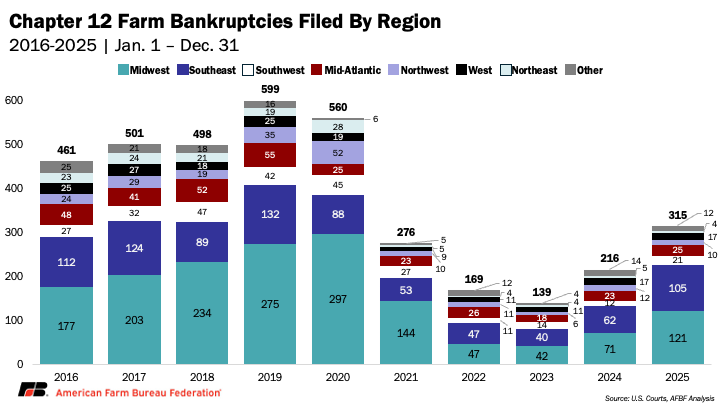
Farmers were already strained before that shock. Chapter 12 bankruptcy filings rose 46% to 315 cases in 2025, according to the American Farm Bureau Federation. It marked the third straight annual increase.
“Significant losses are expected across crop sectors for another year, and many livestock sectors are also tightening margins,” Economist Samantha Ayoub wrote. “A fourth consecutive year of expected declines in farm income will continue to strain agriculture, placing further reliance on credit options that are growing thin.”
Hormuz Disruption Adds a Global Dimension
Meanwhile, the fertilizer shock stems from the disruption in the Strait of Hormuz, a chokepoint for major exporters. Besides the US, India and other agricultural economies face direct risk, with shortages affecting planting decisions during the critical kharif season.
Follow us on X to get the latest news as it happens
Oilfield services firm Baker Hughes assumes the Strait will not fully reopen until the second half of 2026. CFO Ahmed Moghal told investors the company is operating under the assumption that the US-Iran conflict will last at least through June.
In a Dallas Fed survey, nearly 80% of about 100 energy executives expect the Strait to stay closed until August or later. Therefore, the shared view signals a longer disruption.
Fertilizer prices are rising. Farm bankruptcies are climbing for a third year. With a key shipping lane likely to remain restricted, those forces are aligning for further grocery price pressure beyond March’s reading.
Subscribe to our YouTube channel to watch leaders and journalists provide expert insights