


Bitcoin’s mining difficulty has registered its steepest decline in nearly five years.
The historic drop signals a dual crisis of extreme weather constraints and deepening economic pressure on network operators.
Bitcoin Mining Economics Crack Amid Falling Prices
According to Mempool developer Mononaut, the network’s difficulty adjusted downward by 11.16% to 125.86 trillion (T) this week.
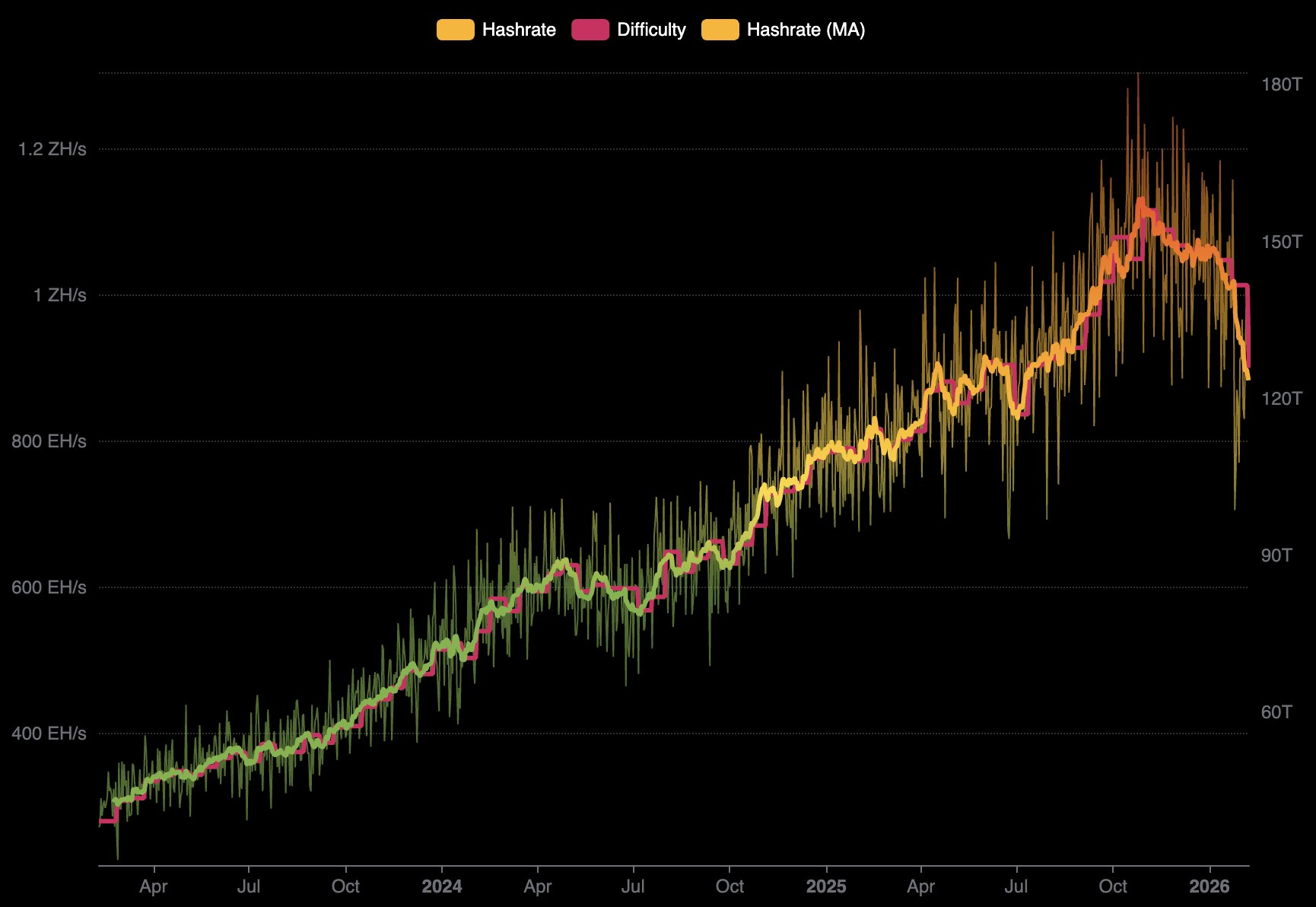
Notably, this adjustment marks the largest capitulation in mining power since July 2021. At the time, a state-mandated ban in China forced a massive exodus of hashing power.
The difficulty adjustment mechanism is designed to keep Bitcoin block production at steady 10-minute intervals.
When miners go offline, block times slow, prompting the protocol to lower the difficulty to make mining easier for the remaining participants.
Unlike the geopolitical shocks of 2021, the current decline is driven by a collision of meteorological instability and thinning profit margins.
The sharp contraction follows severe winter storms across North America in late January, which disrupted energy grids serving major mining clusters.
In jurisdictions such as Texas, miners participate in “demand response” programs. These operators voluntarily reduce their power consumption during peak load periods to help stabilize the grid in exchange for energy credits.
However, the magnitude of this 11% drop suggests more than just temporary curtailment. It points to economic capitulation.
The severe weather stressed the electrical infrastructure, spiking spot power prices.
For operators running older, less efficient hardware, the surge in operating expenses likely pushed profitability into negative territory. This financial strain led to a permanent or semi-permanent shutdown of rigs.
Notably, available data suggest that major industry players were already operating with exceptionally thin margins before the storms hit.
Ki Young Ju, CEO of the analytics firm CryptoQuant, estimated that Bitcoin miner Marathon Digital spent approximately $67,704 to mine a single BTC in the third quarter of 2025.
With BTC trading below $70,000, several miners are operating at a loss before accounting for other general expenses.
