

JPMorgan analysts have flagged a sharp divergence between Bitcoin (BTC) and gold exchange-traded fund (ETF) flows since the Iran conflict erupted. Meanwhile, a separate report reveals stablecoins are now embedded in the illicit gold trade.
The two developments paint a picture of gold under pressure from both ends. Institutional capital is rotating toward BTC, and Tether’s USDT (USDT) is reshaping how physical gold moves through criminal supply chains in Latin America.
Bitcoin ETFs Absorb Capital as Gold Funds Bleed
According to a JPMorgan report led by managing director Nikolaos Panigirtzoglou, the largest gold ETF, SPDR Gold Shares (GLD), has seen outflows equal to roughly 2.7% of its AUM since the war began.
BlackRock’s iShares Bitcoin Trust (IBIT) recorded inflows of about 1.5% over the same period.
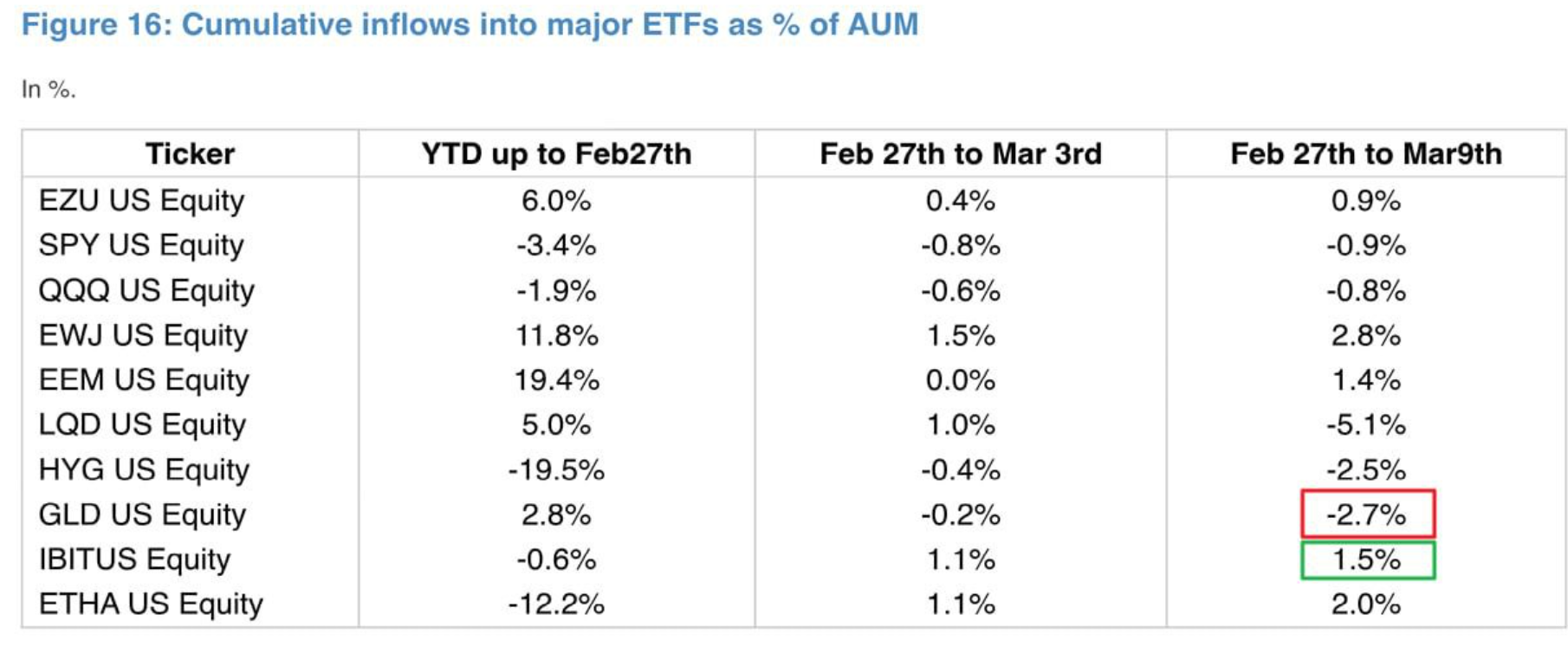
The shift reverses a trend that had favored gold since October 2025. During that stretch, retail investors rotated out of BTC and into gold, resulting in notable IBIT outflows and strong GLD inflows.
However, BTC ETFs still lead gold ETFs in cumulative flows over a longer timeframe, with IBIT’s total inflows since 2024 remaining roughly double those of GLD.
Further, IBIT’s AUM nearly matched GLD’s in July last year before the gap widened again after the October market correction.
Institutional positioning data adds another layer. Short interest in IBIT rose in recent months while short interest in GLD declined.
JPMorgan said this pattern suggested hedge funds had reduced BTC exposure while rotating into gold before the current reversal.
The 30-day net inflow figure for BTC ETFs improved to $906 million as of March 11, recovering from a $1.9 billion outflow a month earlier.
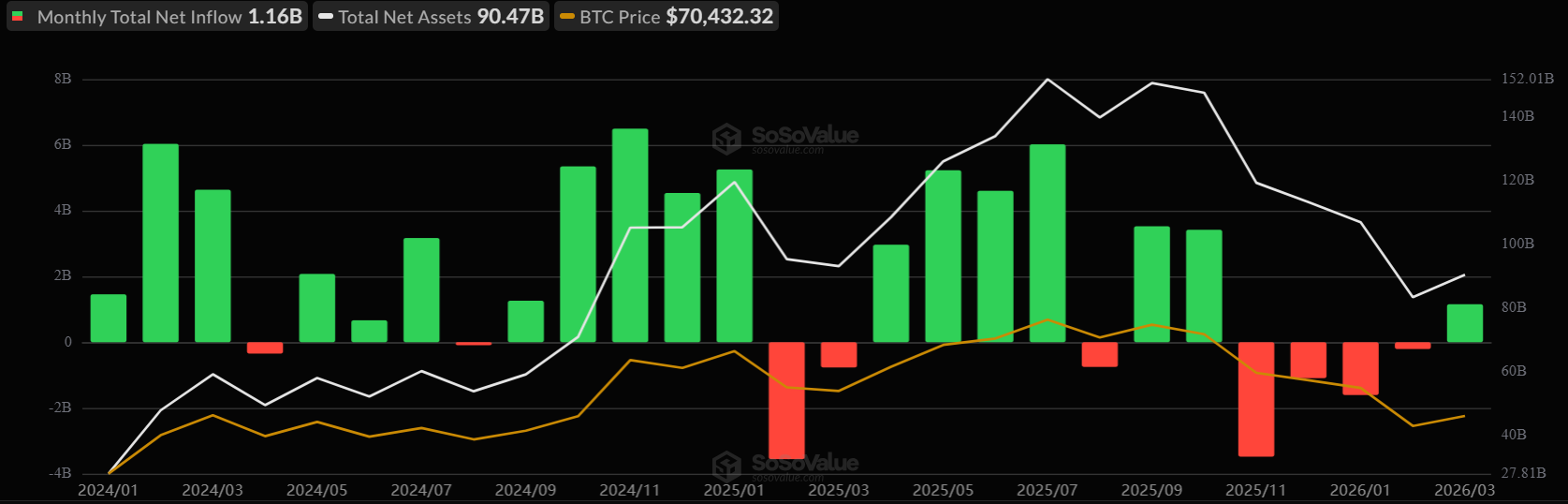
GLD, meanwhile, lost $3 billion in a single day on March 6, the largest daily outflow in two years.
JPMorgan’s analysts also highlighted that BTC’s volatility profile is compressing, which they attributed to deeper institutional ownership and improving market liquidity.
USDT Becomes Payment Rail for Illicit Gold
While BTC gains ground in institutional portfolios, USDT is carving out a role in physical commodity markets that regulators never intended.
A new report from the Global Initiative Against Transnational Organized Crime (GI-TOC), found that Venezuela has become a regional hub for illegally traded Amazonian gold over the past two years.
That reversed earlier patterns in which the metal flowed out of Venezuela toward Brazil and Guyana.
The GI-TOC report, based on interviews with gold traders in Georgetown, Guyana, found that some gold originating from Guyana is now sold in Venezuela in exchange for USDT.
Marcena Hunter, the report’s co-author and Head of Extractives at GI-TOC, said illicit gold traders have been using the stablecoin over the past year.
“This highlights the increasing relevance of stablecoins in global illicit transactions alongside broader concerns about crypto and organised crime,” read an excerpt in the report.
The findings align with a December TRM Labs report that concluded Venezuela had grown increasingly dependent on USDT as sanctions and hyperinflation cut the country off from traditional banking rails.
GI-TOC estimated that Venezuelan gold mining generated just over $2.2 billion in revenue last year, serving as a key source of income as oil revenues declined.
The report also described how the Maduro government used the gold trade to maintain loyalty among politicians and security forces.
Meanwhile, elements within the government coordinated with criminal groups, gaining a foothold in the Amazon Basin.
Tether responded by pointing to its cooperation with global law enforcement, including the freezing of approximately $4.3 billion in assets tied to illicit activity.
Congress Eyes Illicit Gold, but Crypto Gap Remains
Meanwhile, the U.S. Legal Gold and Mining Partnership Act, a bipartisan bill sponsored by Senators John Cornyn, Tim Kaine, Ted Cruz, and Jacky Rosen, passed the Senate Foreign Relations Committee in late January.
The legislation would require the State Department to develop a multi-year strategy to disrupt illicit gold mining in the Western Hemisphere.
It would also direct agencies to investigate Venezuela’s illegal gold trade specifically and establish public-private partnerships for responsible gold supply chains.
However, Hunter noted the bill would need to include provisions addressing crypto’s growing role in laundering gold proceeds to be fully effective.
She said any resulting strategy should focus on disrupting financial flows of illicit actors and preventing foreign persons from accessing the US financial system.
The convergence of these two trends presents a challenge for policymakers.
- BTC is pulling institutional capital away from gold as a safe-haven asset,
- Meanwhile, USDT is becoming a settlement tool in the physical gold trade.
Congress could move to address the stablecoin dimension of illicit commodity flows, which may determine how effectively the new legislation curbs the trade.
