


Binance recorded over $2.2 billion in Tether (USDT) inflows on March 18, marking the largest single-day stablecoin deposit since November 2025.
The surge in stablecoin activity coincides with a broader shift in market sentiment, as the Crypto Fear & Greed Index moved out of extreme fear territory for the first time in nearly seven weeks.
Stablecoin Liquidity Returns After Months of Outflows
Amr Taha, an analyst at the on-chain analytics platform CryptoQuant, flagged the $2.2 billion inflow of USDT to Binance as a signal that liquidity is returning after months of stagnation.
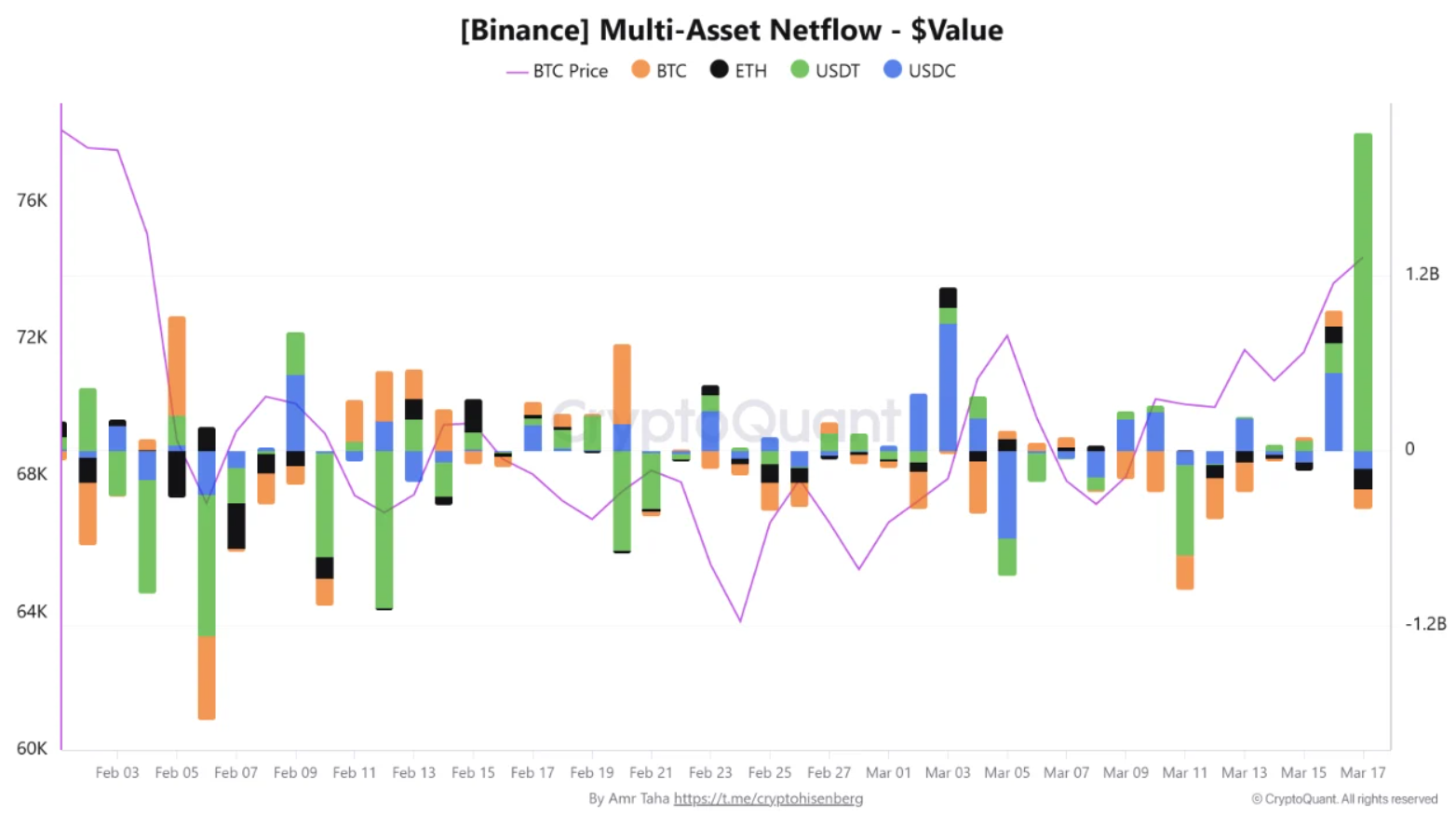
“On March 18, there’s a noticeable green spike, showing a USDT inflow of over $2.2 billion in just one day…Bullish implications…dry powder can absorb any selling pressure, shows confidence from large players, timing with breakout suggests continuation,” wrote Taha.
The deposit represents the highest single-day inflow to the exchange since November 2025.
Separate CryptoQuant data shows that total stablecoin netflows to exchanges exceeded $2.3 billion, the highest level since Q4 last year.
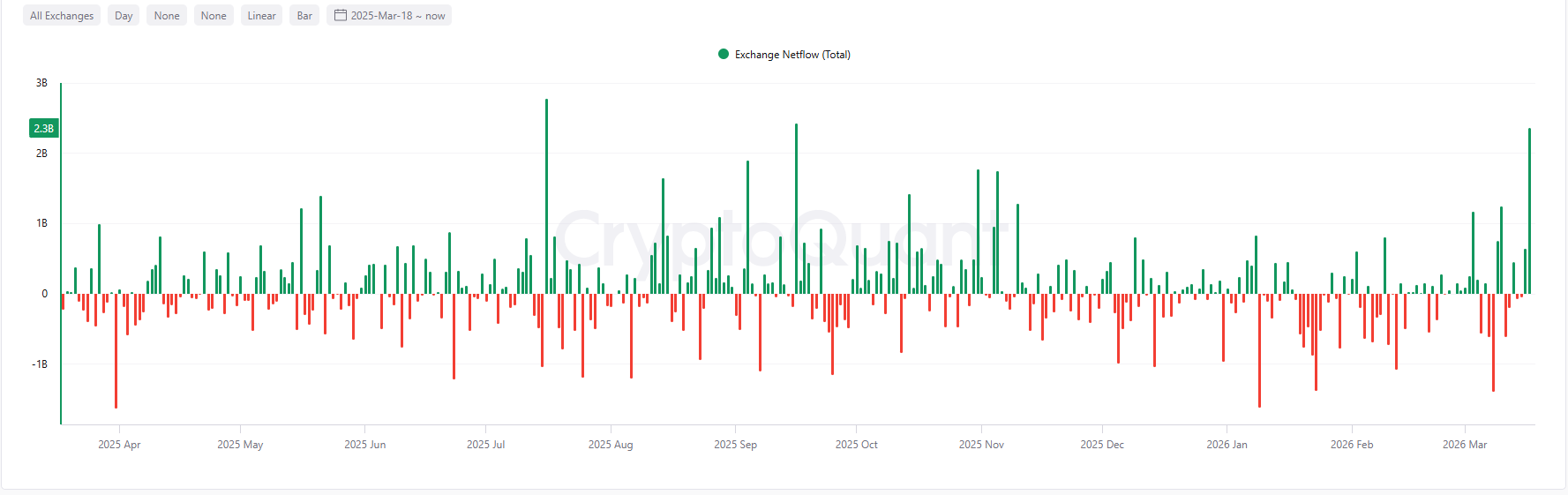
That quarter saw strong inflows as Bitcoin (BTC) rallied toward its all-time high above $126,000 in October 2025.
The timing is notable. Net stablecoin inflows to major exchanges had remained consistently negative for much of early 2026.
On-chain analyst Darkfost previously noted that Binance recorded roughly $2 billion in net stablecoin outflows in a single month earlier this year. This reflects a reduced risk appetite amid heavy geopolitical uncertainty.
Fear Index Shifts as Investors Reposition
Meanwhile, the Crypto Fear & Greed Index rose to 28 on March 18, moving from “extreme fear” into the “fear” category.
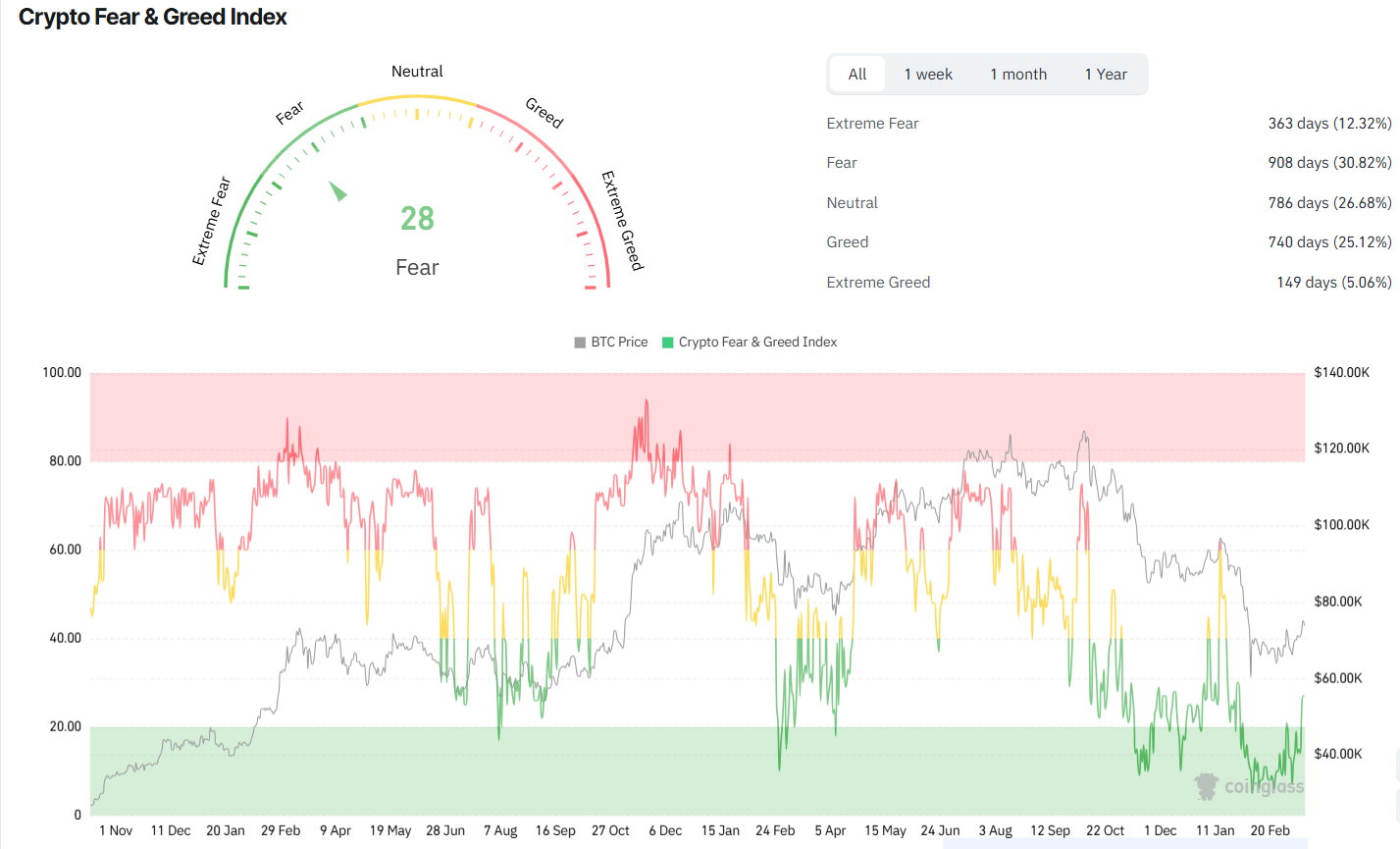
CryptoRank noted that market sentiment is showing early signs of recovery after spending 48 consecutive days below 25.
“Market sentiment shows early signs of recovery, though participants remain cautious and risk appetite is still limited,” wrote analysts at CryptoRank.
The index hit an all-time low of 5 on February 6, lower than the readings recorded during the Terra/Luna collapse, the COVID crash, and the FTX implosion.
The prolonged stretch of extreme fear reflected a market battered by multiple headwinds, including:
- The U.S.-Israeli military strikes on Iran that began on February 28
- Elevated oil prices and
- Uncertainty surrounding Federal Reserve policy under Kevin Warsh.
Bitcoin has shown relative resilience throughout the downturn, trading just above $74,200 as of this writing.
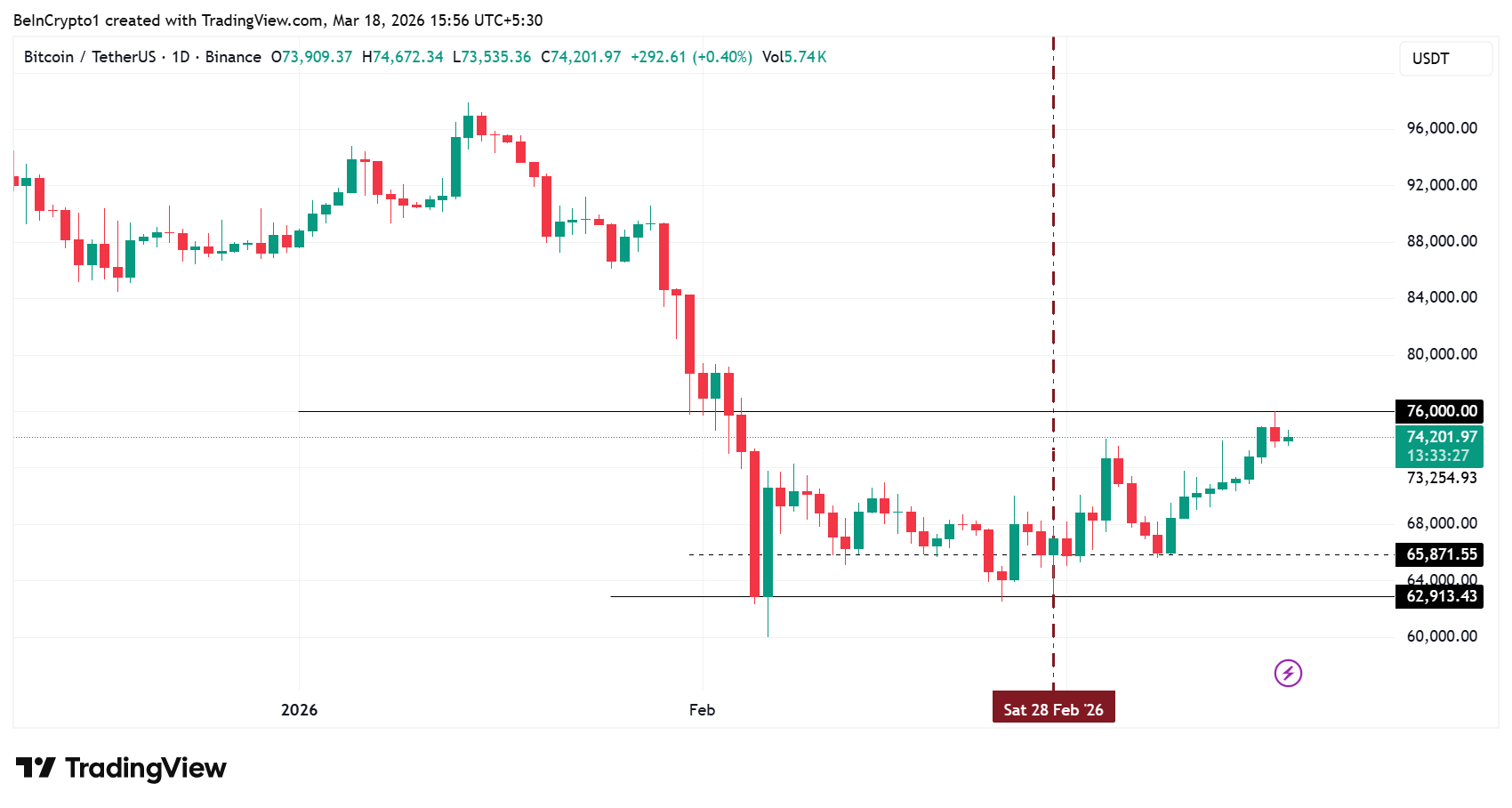
The price consolidation alongside deteriorating sentiment has created an asymmetric setup. Historical analysis suggests that Fear & Greed readings below 30, combined with stable prices, have preceded rallies roughly 68% of the time within two-week windows.
What the Inflow Signals for Traders
Large stablecoin deposits to exchanges typically indicate that traders are positioning capital for deployment rather than exiting the market.
When USDT flows onto an exchange, it represents potential buying power that can be directed toward BTC or altcoins.
This pattern aligns with broader on-chain trends. CryptoQuant data from recent weeks showed declining whale Bitcoin inflows to exchanges, falling from $8.8 billion to $4.5 billion in the first two weeks of March.
Reduced BTC deposits combined with rising stablecoin inflows create what Taha has previously described as a supply-demand asymmetry, where fewer coins are available for sale while more capital is prepared to buy.
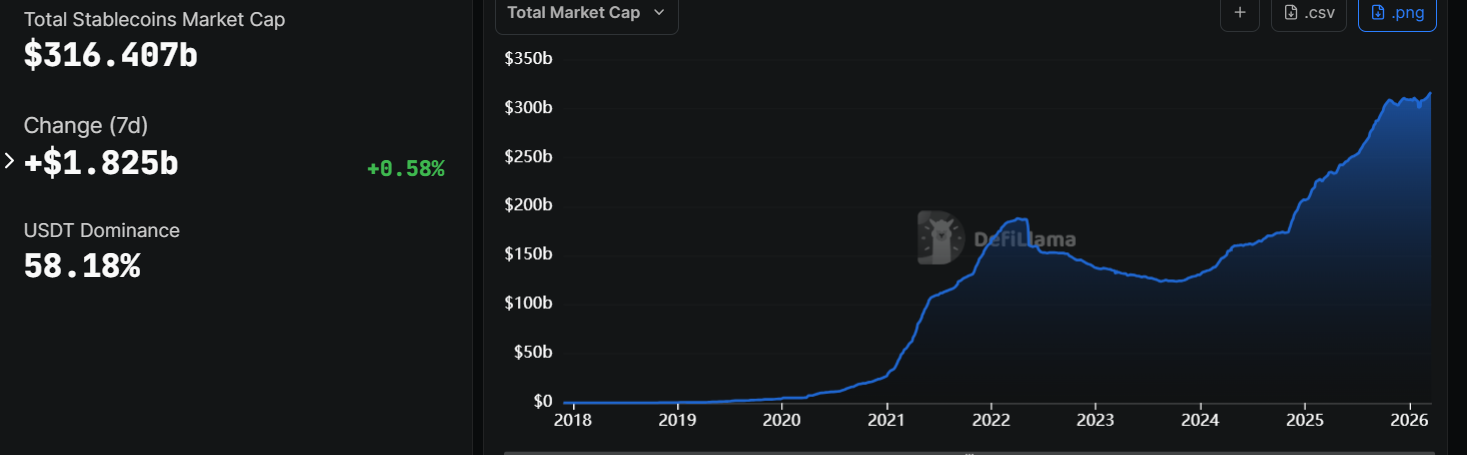
However, caution remains warranted. The stablecoin market cap has climbed past $316 billion to a record high.