The US Treasury now accepts PayPal and Venmo for voluntary public debt contributions through its Pay.gov form. The update arrives as a Strategic Bitcoin Reserve bill targeting the same fiscal problem stalls in Congress.
Donations average roughly $120,000 a month against a $39 trillion total. Interest payments alone run near $88 billion a month, dwarfing any voluntary inflow.
A 64-Year-Old Program Meets Viral Attention
The “Gifts to Reduce the Public Debt” program has operated since 1961 under 31 U.S.C. § 3113. Treasury data show cumulative donations of about $67 million since 1996, with February 2026 inflows near $30,000.
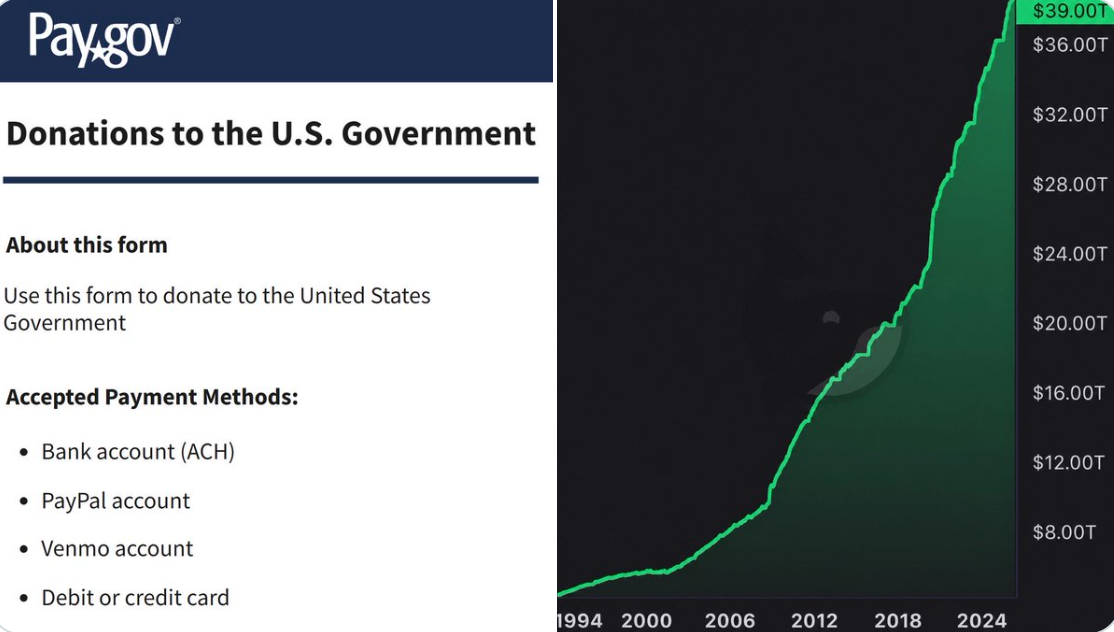
Amid growing US debt. Senator Rand Paul has pushed his Six Penny Plan. The proposal would trim six cents from every federal dollar over five years.
“I introduced the Six Penny Plan because the answer to our debt crisis isn’t complicated. Cut six cents off every dollar. Balance the budget in five years. Protect your children’s future. The only thing standing in the way is Washington’s refusal to live within its means,” he stated.
Strategic Bitcoin Reserve as the alternative
Bitcoin (BTC) advocates contrast the donation program with active proposals to build sovereign crypto holdings. The BITCOIN Act of 2025 was introduced by Senator Cynthia Lummis. It would direct the purchase of 1 million BTC over five years.
Asset manager VanEck has projected that a Strategic Bitcoin Reserve could trim US debt by 36% by 2050.
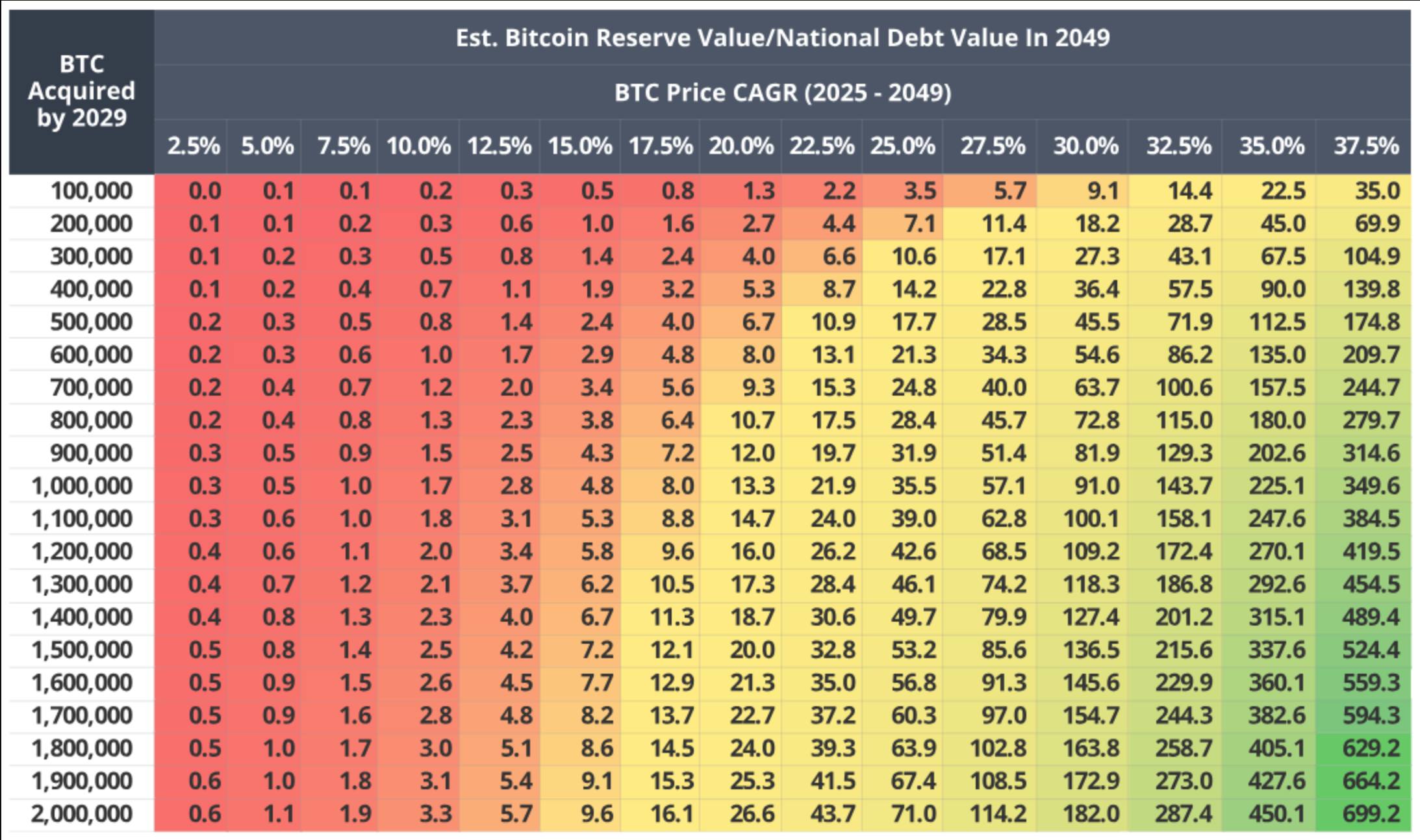
“Assuming today’s $900 trillion of total global financial assets compound at 7.0% from 2025 – 2049, Bitcoin would represent 18% of global financial assets in this scenario,” the firm added.
The bill remains stuck in committee. Lummis announced in December 2025 she will not seek reelection.
President Donald Trump’s executive order created the reserve on paper using forfeited coins. Operational deadlines have lapsed, and Congress has not appropriated new acquisition funds.
The companion Mined in America Act seeks to codify that framework.
The current outlook leaves taxpayers with two contrasting tools. Voluntary digital gifts sit on one side, while a stalled legislative push for fixed-supply reserves sits on the other.