Pi Network (PI) announced it has surpassed 18 million identity-verified users, positioning the figure as a structural advantage over networks that measure growth by wallet count alone.
The post from the Pi Core Team argued that verified identities are necessary for any transfer of value.
How Pi Verified 18 Million Identities
Pi’s in-app KYC system pairs human reviewers with AI-assisted fraud detection. More than 1 million validators processed 526 million verification tasks to confirm approximately 18 million unique identities.
Each submission passed through roughly 30 individual checks before approval.
The network recently completed its first validator reward distribution, paying out 26.5 million PI to participants. Validators earned about 0.05 PI per task, approximately 22 times the standard mining rate.
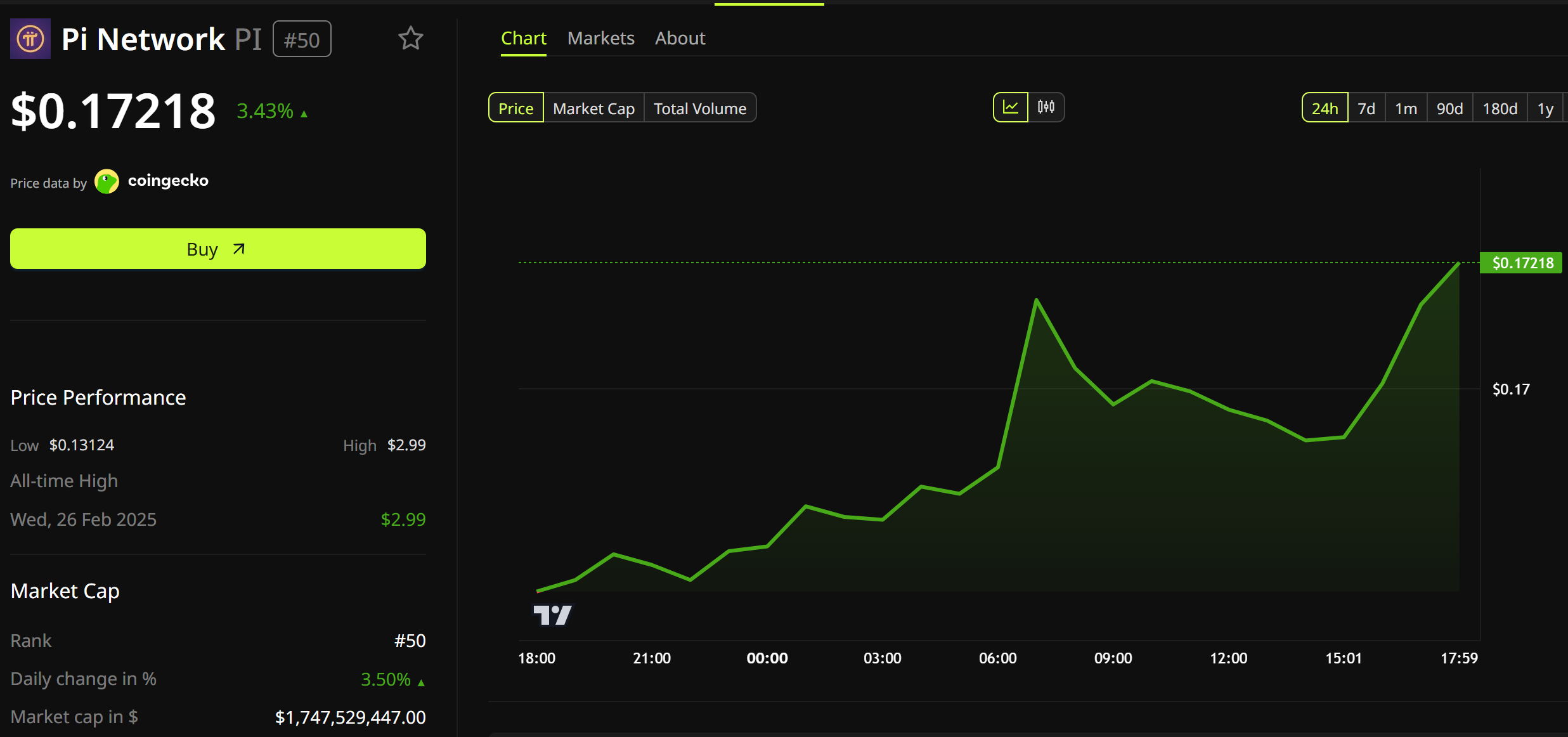
PI traded near $0.17 as of this writing, up 3.43% on the day, with a market cap of $1.75 billion according to CoinGecko data.
Backlogs and Tentative KYC Remain Pain Points
Despite the milestone, a significant number of Pioneers remain stuck in limbo. Nearly 44 million users have held a “tentative” KYC status at various points, meaning their verification requires additional review before full Mainnet access.
“At this rate, it’s going to be 10 years before some people see their Pi,” one pioneer remarked.
Some users report waiting over two years without resolution. Others faced losing accumulated coins when a KYC deadline passed before their applications cleared.
Pi introduced a FastTrack option and automated review system that fully verified an additional 3.36 million Pioneers.
“If eligible, users will see this option directly within the Pi Wallet app, allowing them to begin KYC and, once verified, gain immediate access to the Pi Mainnet wallet and its utilities,” the team wrote in a blog.
However, with over 16 million Mainnet migrations completed so far, a gap remains between verified and fully migrated accounts.
Whether Pi’s identity-first approach translates into sustained real-world adoption may depend on how quickly it clears the backlog of verifications that continues to frustrate its most loyal users.