


The crypto market in March remains in extreme fear, and the downtrend among altcoins shows no clear signs of recovery. In this environment, several altcoins carry their own unique catalysts. These factors encourage many traders to bet against the broader market trend, potentially leading to large liquidation losses.
Which altcoins are involved, and what risks should derivatives traders pay attention to this week?
1. Bittensor (TAO)
Positive discussions around Bittensor (TAO) have begun to emerge as the price shows signs of recovery. TAO rebounded from a low of $144 last month to above $196 this month.
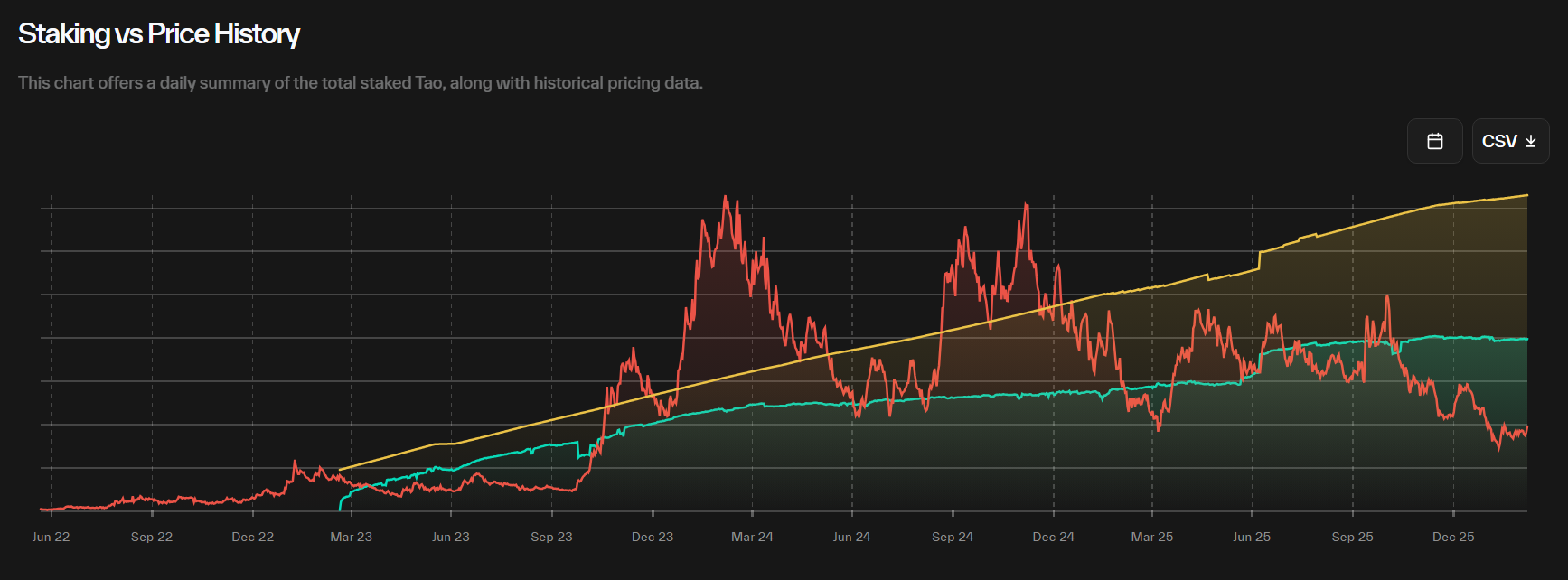
TAO holders believe the altcoin has several advantages that could sustain the recovery. Currently, about 68% of the TAO supply is staked. Although TAO’s price fluctuates, the amount of staked tokens has steadily increased from 2023 to 2026.
“I believe that with such a low cir supply, if demand increases, the price of $TAO could react strongly. And if we look at the current chart, $TAO looks like it’s sitting in a pretty solid accumulation zone right now. I personally will continue accumulating more $TAO around this range. Target $1000.” – DeFi influencer Tanaka predicted.
This confidence has encouraged TAO traders to allocate more capital and leverage to Long positions in March. The liquidation map shows that the cumulative liquidation volume of TAO Long positions significantly outweighs Short positions.
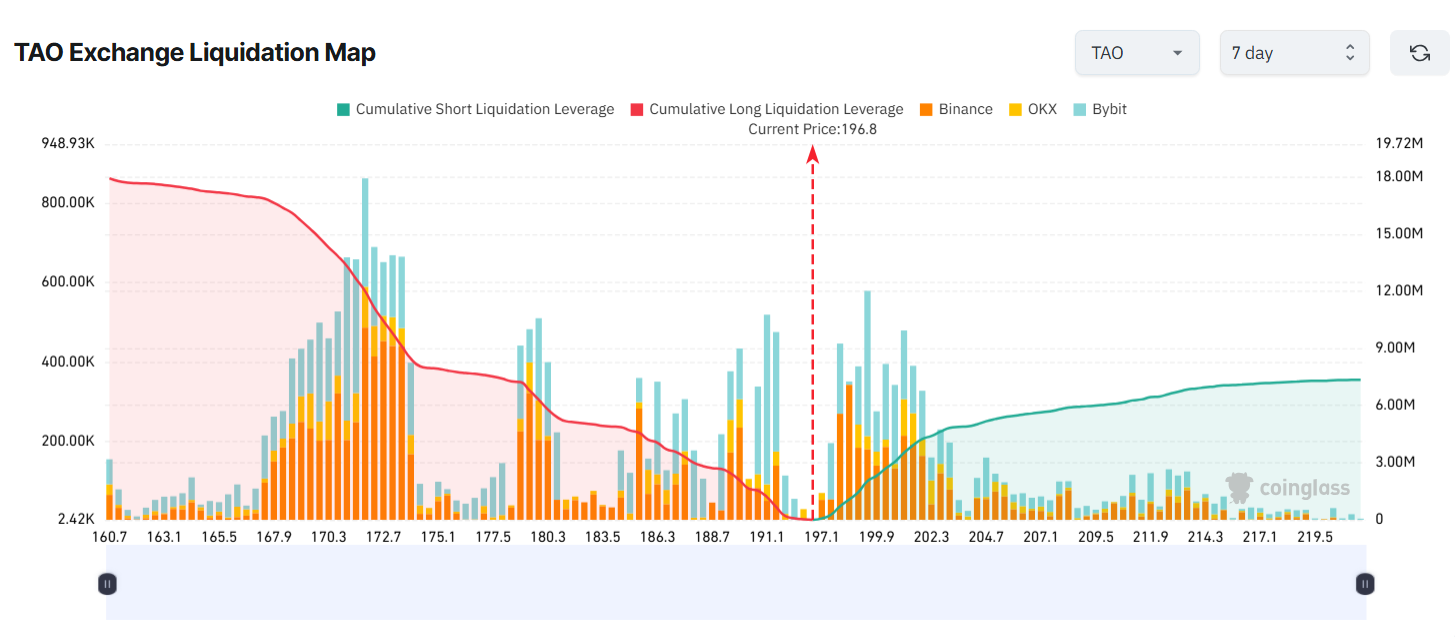
Long traders believe TAO’s internal momentum could help the price withstand selling pressure driven by rising market risk aversion.
However, negative developments from the Middle East could trigger further capital outflows from altcoins. Such events could push prices lower and trigger liquidations.
Data from Coinglass shows that if TAO falls toward $160 this week, Long positions could face nearly $18 million in liquidation losses.
2. World Liberty Financial (WLFI)
Last month, BeInCrypto reported on the proposed WLFI Governance Staking System. The proposal aims to encourage investors to participate more actively in WLFI governance.
The proposal requires staking as a condition for voting with unlocked tokens. The voting deadline is approaching. More than 99% of votes support the proposal, while only 0.5% oppose it.
If the proposal passes, it could create demand momentum for WLFI and support a price increase. Meanwhile, the WLFI liquidation map shows that potential liquidation volume on the Short side dominates.
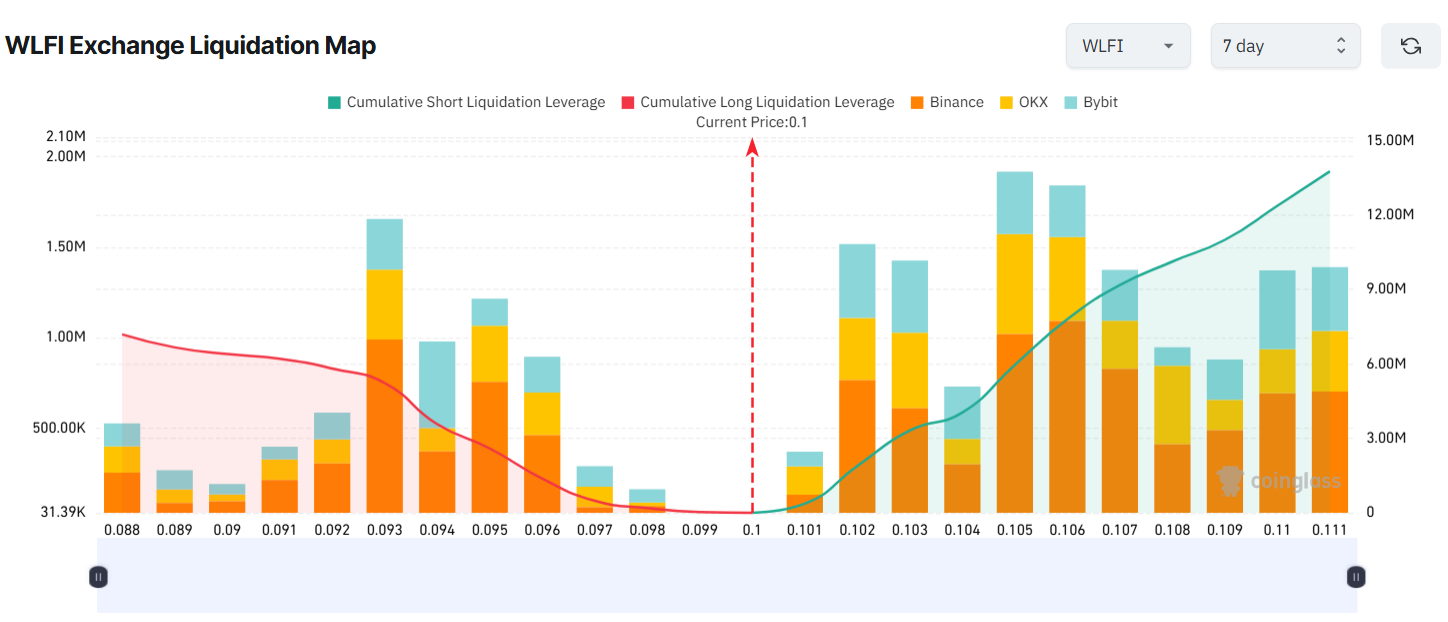
Therefore, if these new catalysts push WLFI’s price higher this week and it surpasses $0.11, Short positions could face liquidation losses exceeding $13 million.
3. OKB
Last weekend, OKB surged 40% after Intercontinental Exchange (ICE), the parent company of the New York Stock Exchange (NYSE), acquired a stake in OKX at a $25 billion valuation and secured a seat on its board of directors.
The altcoin continues to attract traders’ attention. OKB’s Open Interest has increased from $17 million last week to more than $33 million this week.
Short sellers may believe the recent surge could fade quickly due to the market’s overall negative sentiment. However, Long traders may feel confident that OKB’s narrative is strong enough to expand its market capitalization as OKX’s valuation rises.
“Although the crypto and altcoin markets look bleak, centralized exchanges are not. The investment from Intercontinental Exchange proves this. CEX platforms have massive young user bases and mature trading engines. They can easily expand into other asset classes such as gold, silver, crude oil, stocks, and equity. When combined with prediction markets and news trading, future CEX platforms could become new trading ecosystems where everything is tradable. They may evolve into super financial apps rather than platforms limited to crypto.” – Colin Wu, Editor-in-Chief of Wu Blockchain, predicted.
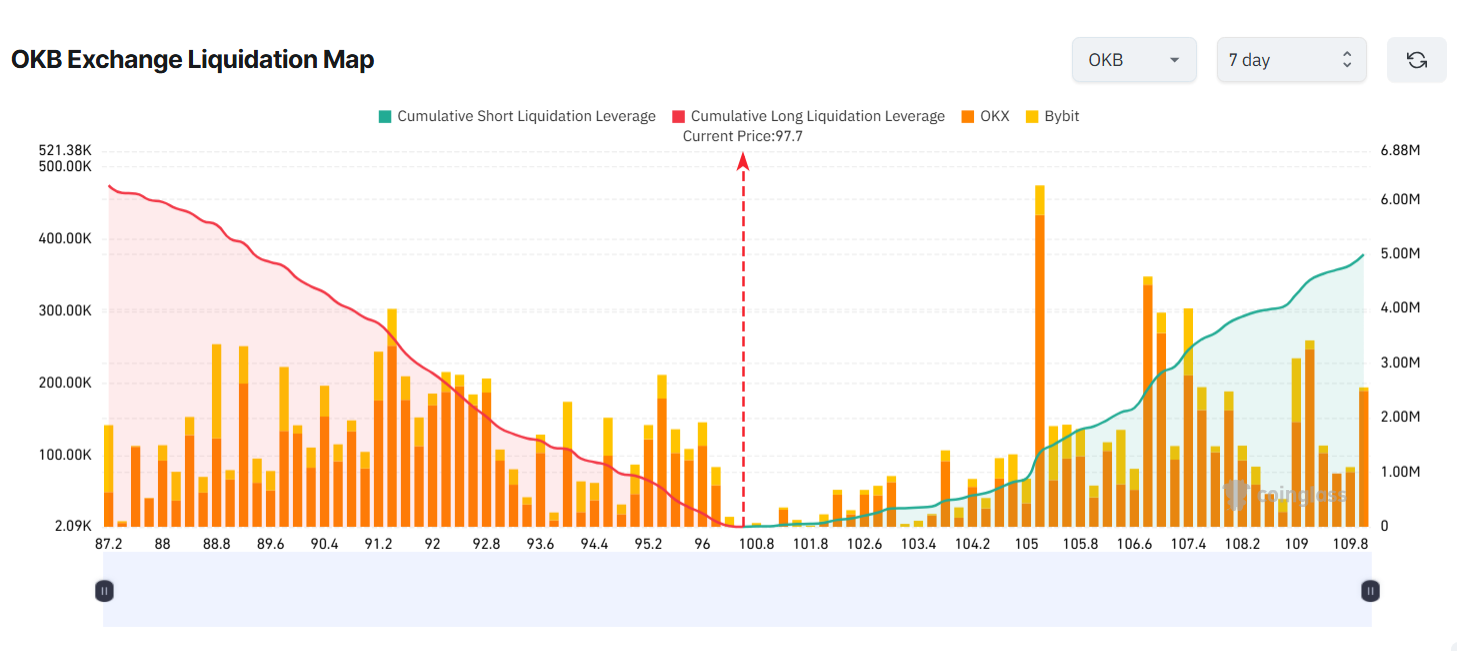
The liquidation map shows that if OKB falls to $87.2, the cumulative potential liquidation volume of Long positions could exceed $6 million. Conversely, if OKB rises to $109.8, the cumulative potential liquidation volume of Short positions could reach $5 million.
Overall, these altcoins are caught between positive internal catalysts and negative pressure from the broader market sentiment. This situation creates a critical test that could lead to large and unexpected volatility, especially for highly leveraged traders.
