


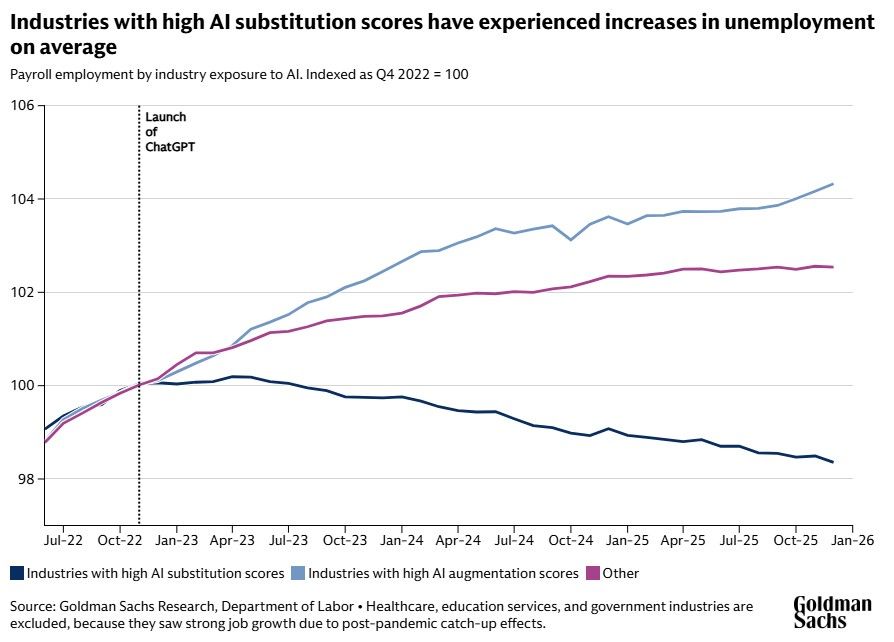
AI has trimmed US monthly payroll growth by roughly 16,000 jobs over the past year, according to new research from Goldman Sachs economists, nudging the unemployment rate up by 0.1 percentage point.
The analysis separates jobs at risk of being replaced by AI from those where the technology augments human workers. That distinction reveals a far more uneven labor market than headline figures suggest.
The Jobs AI Is Replacing
The study from Goldman Sachs economist Elsie Peng combines a displacement score with an IMF complementarity index. The result pinpoints roles where AI substitutes for workers rather than simply overlapping with them.
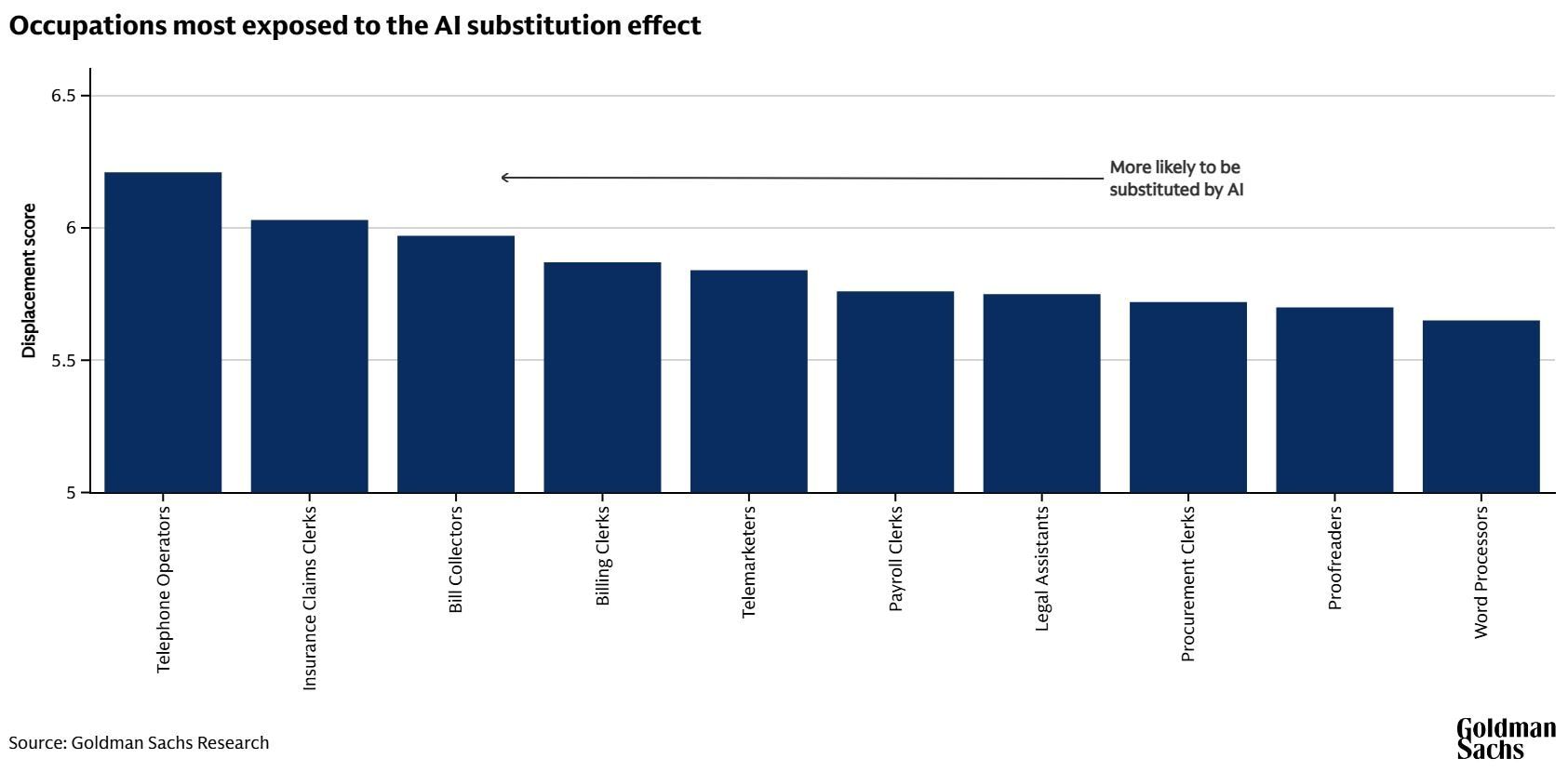
Telephone operators, insurance claims clerks, and bill collectors face the highest substitution risk, Peng writes. Customer service representatives and data entry staff sit close behind. These occupations have already shown declines in operating costs and job postings at exposed firms.
However, the costs are not distributed evenly. The research finds the employment drag falls mainly on younger, less experienced workers. They compete most directly with AI systems on tasks that once served as entry-level pathways into white-collar work. Entry-level hiring in professional services has cooled sharply over the same period.
Where AI Creates New Work
Still, not every exposed role is shrinking. Looking only at occupations with high augmentation potential, Goldman Sachs estimates AI has added roughly 9,000 jobs per month. That modestly lowered the unemployment rate.
Education workers, judges, and construction managers top the augmentation list. These roles require physical presence, judgment, or interpersonal skills that AI cannot fully replicate. Studies cited by Peng show firms in augmented sectors have posted stronger productivity growth and more job openings.
Peng frames the pattern through Jevons paradox, the 19th-century observation that efficiency gains can raise total demand. When AI cuts the cost per unit of output, buyers often want more. That pulls additional workers back into exposed sectors.
However, the aggregate figure may also understate AI’s role in job creation. Hiring tied to data center construction and wider productivity gains from AI adoption are not captured in Goldman’s current estimate.
That leaves the true net effect on US employment an open question as corporate AI spending continues to climb through 2026. The next monthly jobs report should offer a fresh data point on whether the substitution trend is accelerating.